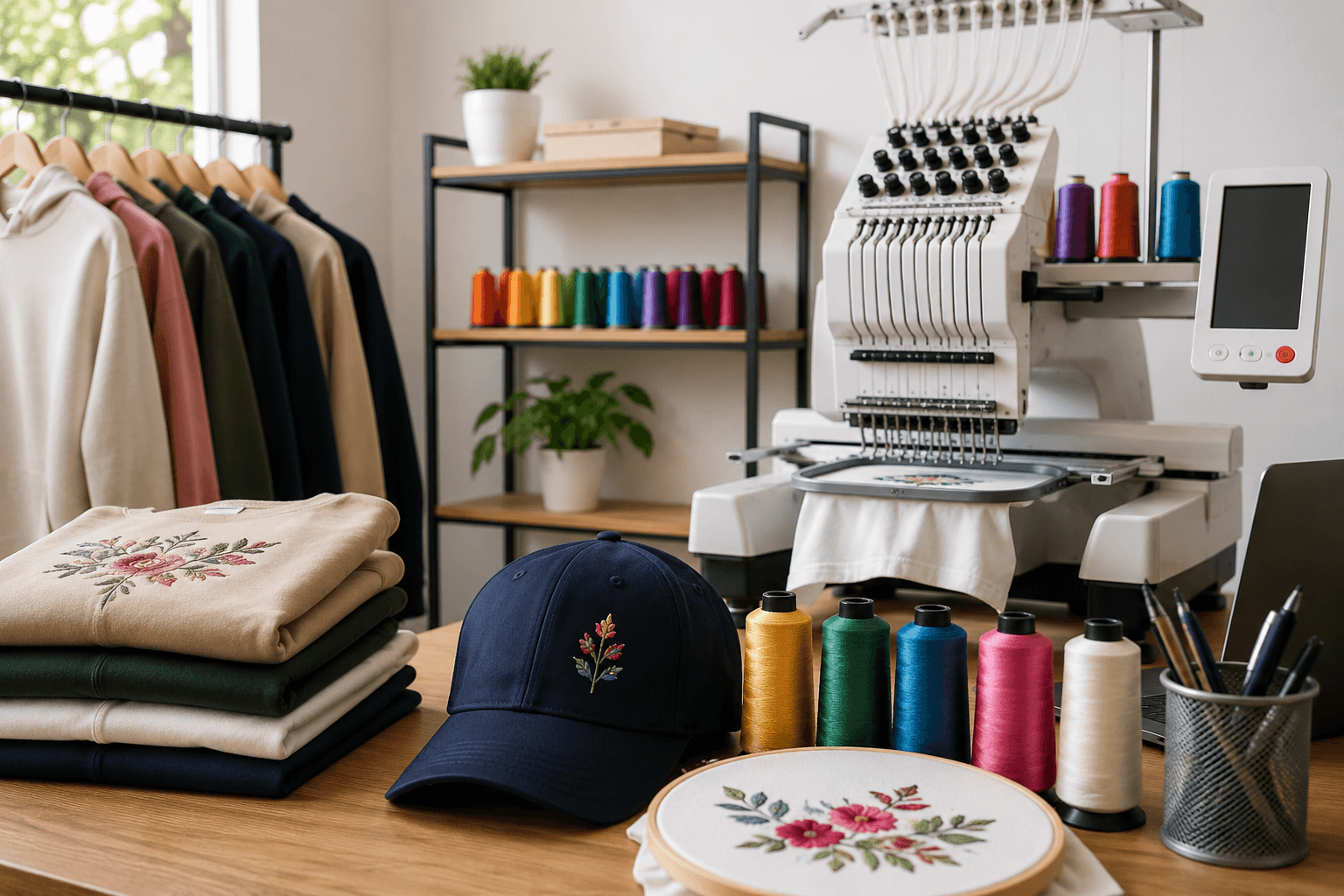
Embroidery digitizing pricing depends mainly on stitch count, design size, artwork complexity, garment type, and the level of editing or manual digitizing required. A simple logo may cost relatively little to digitize, while a detailed design with multiple colors, small lettering, gradients, or 3D effects can require considerably more work.
Unlike embroidery production, digitizing is the process of converting artwork into a machine-readable embroidery file. The digitizing fee usually covers the work required to create, edit, optimize, and test the stitch pattern so the design can embroider cleanly.
If you are wondering how much embroidery digitizing costs, the answer depends on the design rather than simply its dimensions or number of colors.
A basic embroidery digitizing project can often cost around $10–$30, while more detailed logos and complex artwork may cost $30–$75 or more. Highly detailed designs, large jacket backs, 3D puff embroidery, specialty lettering, and complicated artwork can require custom quotes.
These figures are general market estimates rather than fixed rates. Every digitizing company can use a different pricing model.
The most common factors affecting embroidery digitizing prices are:
For a broader look at pricing, see our guide to how much embroidery digitizing costs.
Embroidery digitizing converts artwork, such as a logo, illustration, or graphic, into a stitch-based file that an embroidery machine can understand.
A digitizer decides how different parts of the artwork will be embroidered. This includes selecting stitch types, stitch direction, density, underlay, sequencing, and other settings.
Common embroidery file formats include DST, PES, VP3, JEF, and others. The correct format depends on the embroidery machine being used.
If you are unsure which format you need, our guide to embroidery file formats explains the major options.
Simply converting an image into an embroidery file does not guarantee a good result.
A professional digitizer must consider how thread behaves on the selected fabric. Details that look sharp on a computer screen may become unclear when stitched.
For example:
That is why a professionally digitized design can be more valuable than the cheapest available file.
Stitch count is one of the most important factors in embroidery digitizing pricing.
A stitch count represents the approximate number of stitches required to reproduce the design.
For example, a simple chest logo might require fewer stitches than a detailed jacket-back design. More stitches generally mean more planning, digitizing work, and potential production considerations.
However, more stitches do not automatically mean better embroidery. An experienced digitizer aims to create the necessary coverage without adding unnecessary stitches.
You can learn more about this topic in our guide on how many stitches a logo should have.
The physical size of the embroidery can significantly affect pricing.
A small left-chest logo and a large jacket-back design may use the same original artwork but require very different digitizing approaches.
Larger designs can require:
This is why digitizing companies may request the exact finished embroidery dimensions before providing a final quote.
Complexity can have a major effect on the cost of embroidery digitizing.
A simple logo consisting of a few solid shapes is generally easier to digitize than artwork containing:
A complex design requires more manual decision-making, which can increase the digitizing fee.
For more information, see our complete guide to embroidery digitizing.
The quality of the artwork supplied to the digitizer also matters.
A clean vector logo is generally easier to work with than a small, blurry JPEG or PNG.
Poor-quality artwork may require additional preparation before digitizing, including:
If your artwork is not ready for embroidery, you may need vector art conversion before or alongside digitizing.
A design with multiple thread colors may require additional planning and color changes.
However, color count alone should not be used to determine whether a design is difficult.
A five-color logo can sometimes be easier to digitize than a two-color illustration containing many small and complicated elements.
Professional pricing therefore usually considers the complete design rather than simply charging a fixed amount per color.
Small lettering can make an embroidery design more challenging.
Embroidery thread has physical limitations. Very small characters may not reproduce clearly at the same size as they appear in digital artwork.
A digitizer may need to modify:
Sometimes the artwork needs to be simplified to produce readable embroidery.
The garment or item being embroidered can influence how a design should be digitized.
A design intended for a flat cotton shirt may require a different approach from artwork intended for:
For example, curved caps can present different challenges because the embroidery area is not completely flat.
Our guide to digitizing for different garments explains why the same design may need adjustments for different products.
There is no universal price list, but the following examples can help explain how complexity affects quotes.
| Design Type | Typical Complexity | General Pricing Level |
|---|---|---|
| Simple text | Low | Lower |
| Basic small logo | Low | Lower |
| Standard business logo | Low–Medium | Moderate |
| Detailed logo | Medium–High | Moderate–Higher |
| Large jacket-back design | High | Higher |
| Detailed illustration | High | Higher |
| 3D puff design | Specialty | Custom pricing |
| Highly detailed artwork | Very High | Custom quote |
These are general pricing categories rather than guaranteed prices. The actual cost depends on the artwork, dimensions, stitch requirements, garment, and digitizing provider.
Some digitizing companies use cost per 1,000 stitches as part of their pricing model.
For example, a provider might calculate a design using:
Estimated stitch count ÷ 1,000 × rate per 1,000 stitches
However, this is not the only pricing method used in the industry.
A simple 20,000-stitch design does not necessarily require the same amount of digitizing work as another 20,000-stitch design.
Two designs with identical stitch counts can differ substantially in:
Read our dedicated guide to embroidery digitizing cost per 1,000 stitches for a closer look at this pricing model.
Imagine two company logos.
This design may be relatively straightforward to digitize.
Logo B requires more planning and potentially more manual digitizing.
Even if both logos eventually have similar stitch counts, Logo B could cost more because the complexity of creating a reliable stitch file is greater.
Not necessarily.
Stitch count is important, but professional digitizing pricing should not rely on stitch count alone.
A skilled digitizer may actually reduce unnecessary stitches while improving the final result.
Excessive stitching can lead to:
The goal is not simply to create the highest possible stitch count. The goal is to create an embroidery file that produces the desired appearance efficiently.
3D puff embroidery uses foam beneath the stitches to create a raised appearance.
Because puff embroidery requires specialized digitizing techniques, it can cost more than a standard flat embroidery design.
The digitizer may need to consider:
If your project involves caps or raised lettering, our guide to 3D puff embroidery on caps provides additional information.
When comparing digitizing services, price should not be your only consideration.
An inexpensive file can become expensive if it produces poor embroidery and needs to be redigitized.
Common problems with poor digitizing include:
For businesses producing hundreds or thousands of embroidered garments, these problems can increase production costs.
Our article on 5 embroidery digitizing mistakes to avoid covers common problems that can affect final embroidery quality.
Before ordering, ask the digitizing provider what the quoted price includes.
A professional quote may cover some or all of the following:
Not every provider includes the same services, so it is important to confirm the details before ordering.
Ask:
You do not necessarily need to sacrifice quality to control your budget.
Send the best version of your logo or artwork available. Clean vector artwork can reduce preparation work.
Tell the digitizer exactly where the design will be embroidered and its intended dimensions.
If extremely small details will not reproduce well in thread, simplifying them can improve the final design and reduce unnecessary digitizing work.
A standard flat embroidery design may be more economical than specialty techniques when a raised or decorative effect is not necessary.
If you need the same logo for caps, shirts, jackets, and other garments, ask whether separate optimized versions are required.
A design that works well at one size may not automatically produce the best results at another size.
It is important to understand that digitizing cost and embroidery production cost are different.
This pays for creating the machine-ready embroidery file.
This is the cost of physically embroidering the design onto a garment or product.
Production pricing may depend on:
Therefore, paying $20 for digitizing does not mean the entire embroidery project will cost $20.
When comparing providers, look beyond the advertised price.
Consider:
Review examples of actual embroidery rather than only digital previews.
Confirm that the provider supports the format required by your embroidery machine.
For example, you may need DST, PES, JEF, VP3, or another format.
Ask whether corrections or revisions are included.
A provider experienced with caps may approach a cap logo differently from someone primarily working with flat garments.
If you have a production deadline, confirm the expected delivery time before ordering.
For more guidance, see how to choose embroidery digitizing services near you.
To receive a more accurate embroidery digitizing quote, provide:
The more information you provide, the easier it is for a digitizer to estimate the work involved.
Embroidery digitizing can range from around $10 to $30 for simple designs, while detailed or specialty designs may cost $30 to $75+. Complex artwork, large designs, 3D puff embroidery, and rush projects may require custom quotes.
Some providers use stitch count or a cost-per-1,000-stitches model, while others use flat rates based on design complexity. Stitch count is an important factor but does not determine every quote.
Complex logos require more manual planning, object sequencing, stitch adjustments, density control, and testing. Small details and complicated artwork can significantly increase the time required.
Yes. Larger designs often require more stitches and additional planning. However, size alone does not determine the price because complexity and embroidery technique also matter.
High-quality vector artwork can make the preparation process easier because the shapes and outlines are clearer. However, a vector file still needs to be properly digitized for embroidery.
It can. 3D puff requires specialized digitizing considerations, including foam coverage, column construction, sequencing, and edge definition.
Not always. A design optimized for a flat shirt may need modifications for a cap, jacket, patch, or other material. Different garments can require different stitch settings and design adjustments.
The cheapest option is not necessarily the lowest advertised price. Providing clean artwork, accurate dimensions, the correct file requirements, and avoiding unnecessary revisions can help keep the overall cost down.
Embroidery digitizing pricing depends on much more than stitch count. Design size, complexity, artwork quality, garment type, lettering, stitch density, embroidery technique, and file requirements can all affect the final price.
For a simple logo, a basic digitizing service may be enough. For detailed branding, large jacket designs, caps, or 3D puff embroidery, professional manual digitizing can provide better control and more reliable results.
Before ordering, compare the quality of the digitizer’s work, revision policy, file compatibility, turnaround time, and overall service, not just the advertised price.
If you are preparing artwork for embroidery, understanding the relationship between stitch count, size, complexity, and garment type can help you get a more accurate quote and avoid unexpected costs.