
Why Custom Embroidery Patches Matter More Than You Think
In an increasingly digital world, the tactile, handcrafted appeal of custom embroidery patches has experienced a remarkable resurgence. Whether adorning military uniforms, corporate apparel, sports jerseys, or band merchandise, embroidered patches represent far more than simple decorative elements—they’re a statement of quality, heritage, and attention to detail.
Custom embroidery patches have been trusted for over a century by organizations ranging from the military to Fortune 500 companies. Their durability, vibrant appearance, and professional finish make them the gold standard for brand representation. According to industry experts, embroidered patches outlast screen printing by 5-10 times, with proper care. Today, modern manufacturing techniques have made custom patches more accessible and affordable than ever, while maintaining the premium quality that made them legendary.
What Are Custom Embroidery Patches? Definition & A Brief History
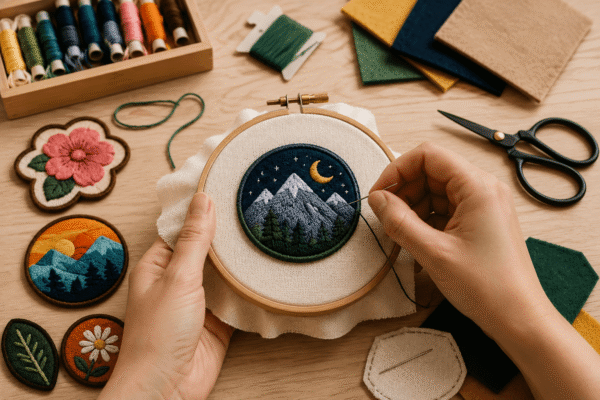
A custom embroidery patch is a piece of fabric that has been embroidered with a unique design using specialized thread. Unlike screen printing or digital printing, which apply ink to fabric surfaces, embroidery creates a three-dimensional texture through the interlocking of thread stitches. This fundamental difference is what gives embroidered patches their distinctive appearance, superior durability, and premium feel.
The History Behind Embroidered Patches
Embroidery dates back thousands of years, with evidence suggesting its practice in China, India, and the Middle East as early as 3000 BCE. However, the concept of embroidered patches as standardized items emerged during the military era, particularly during World War I and World War II, when armed forces needed durable, weather-resistant insignia that could withstand harsh conditions.
Military units discovered that embroidered patches were ideal because they:
- Resisted fading from sun exposure and rain
- Could be easily attached to various uniforms and gear
- Maintained their appearance through extensive washing
- Conveyed authority and professionalism
After World War II, this innovation quickly spread beyond military applications. Sports teams, motorcycle clubs, corporate organizations, and emergency services all recognized the value of embroidered patches. Today, custom embroidery patches are used across virtually every industry, from healthcare and education to entertainment and nonprofit organizations.
Types of Embroidered Patches Explained: Which Style Fits Your Brand?
Not all embroidered patches are created equal. Understanding the different types available will help you make an informed decision that aligns with your design vision, budget, and intended use.
1. Woven Patches (Most Common)
Woven patches are the most traditional and widely used type of embroidered patch. In this method, thread is woven directly into a backing fabric, creating an intricate design with fine detail and precise color reproduction. The backing fabric typically consists of twill, cotton, or polyester.
Advantages of Woven Patches:
- Exceptional detail and color accuracy
- Superior durability for long-term wear
- Professional, polished appearance
- Excellent for logos with fine lines or small text
- Most affordable option for custom patches
Best For: Corporate uniforms, sports teams, professional branding, military insignia, and any application where detail and longevity matter.
2. 3D Puff Embroidery Patches
3D puff embroidery takes traditional embroidery to the next level by incorporating foam backing material that creates a dimensional, raised effect. Special foam is placed beneath the stitched design, and when the needle passes through it, the foam creates height and depth that makes the design literally stand out from the fabric.
Why Choose 3D Puff Patches:
- Creates visual impact and memorable designs
- Perfect for logos that need to command attention
- Excellent for promotional merchandise
- Still maintains durability despite dimensional height
- Ideal for headwear, jackets, and caps
Best For: Sports team caps, promotional merchandise, high-visibility apparel, and designs that need to stand out from a distance.
3. Felt Patches (Chenille & Appliqué)
Chenille embroidery, often called “felt patches,” uses fuzzy, yarn-like thread (called chenille) instead of traditional embroidery floss. This creates a plush, cushioned appearance that’s particularly popular for casual and vintage aesthetics.
When to Use Chenille/Felt Patches:
- Retro or vintage-inspired designs
- Casual wear and lifestyle brands
- Designs with larger color blocks
- College and university merchandise
- Trendy streetwear applications
Best For: Fashion brands, colleges, casual lifestyle products, and anyone seeking that classic vintage varsity look.
4. Twill Patches
Twill is a particular type of backing fabric known for its diagonal weave pattern, which creates a sturdy, slightly textured surface. Patches made with twill backing offer superior durability and a distinctive appearance.
Twill Patch Characteristics:
- Exceptional durability and tear resistance
- Superior color retention through washing
- Professional military and industrial standard
- Slightly thicker and more rigid than other options
Best For: Workwear, military uniforms, outdoor gear, and any application requiring maximum durability.
5. Iron-On & Velcro-Backed Patches
These patches feature special backing materials that allow for easy attachment without sewing:
- Iron-on backing: Heat-activated adhesive that fuses the patch to fabric
- Velcro backing: Allows for removable attachment and easy repositioning
Best For: Temporary applications, practice uniforms, people learning a skill, or situations where patches need to be interchangeable.
Materials Used in Professional Patch Manufacturing: Quality Matters
The quality of your custom patches depends heavily on the materials used during manufacturing. Professional patch manufacturers carefully select each component to ensure maximum durability and aesthetic appeal.
Thread Types & Their Applications
The thread used in your patches plays a crucial role in their longevity and appearance. Premium patch manufacturers use industrial-grade threads that resist fading, fraying, and breakage:
- Polyester Thread: Most common choice; UV-resistant, colorfast, affordable, and works with most backing materials
- Rayon Thread: Creates a slight sheen; softer appearance but requires careful handling
- Metallic Thread: Adds shimmer and dimension; ideal for premium designs
- Wool Thread: Used primarily in high-end, specialty applications
Backing Fabric Options
- Twill: Diagonal weave pattern, maximum durability
- Cotton: Soft, breathable, traditional option
- Polyester: Lightweight, water-resistant, vibrant colors
- Felt: Plush backing for embossed or specialty effects
Edge Finishing Methods
How the edges of your patch are finished affects both durability and appearance:
- Merrowed Edge: Professional stitched border; most common for sewn-on patches
- Cut Edge: Simple trim; most economical option
- Heat-Sealed Edge: Melted synthetic edge; prevents fraying on polyester patches
- Laser-Cut Edge: Precise, professional edge; ideal for complex shapes
Pro Tip: Merrowed edge finishing offers the best balance of professionalism and durability, which is why it’s the industry standard for military and corporate patches.
Durability & Longevity: What Can You Really Expect?
One of the most common questions about custom embroidery patches is: “How long will they last?” The answer depends on several factors, but properly manufactured patches are genuinely built to last a lifetime.
Durability Factors
- Material Quality: Premium threads and backings significantly extend lifespan
- Stitch Density: Higher stitch count creates denser, more durable designs
- Attachment Method: Sewn patches last longer than iron-on in most cases
- Environmental Conditions: UV exposure, humidity, and temperature affect longevity
- Care & Maintenance: Proper washing extends patch life by years
Real-World Durability Benchmarks
Based on industry testing and real-world use cases:
- Military patches: 20+ years of active service (documented by military standards)
- Sports uniforms: 5-10 years with regular washing
- Corporate apparel: 7-15 years depending on washing frequency
- Collectible/promotional patches: Decades or longer (museum-quality preservation)
- Outdoor gear: 10+ years despite sun exposure and weather
Maintenance Tips to Maximize Longevity
- Wash in cold water with gentle detergent
- Use delicate or hand-wash cycles
- Avoid bleach and fabric softeners
- Air dry whenever possible; tumble dry on low if necessary
- Store away from direct sunlight
- Repair loose stitching promptly
Industry Standard: Most professional patch manufacturers guarantee their products to withstand at least 50 wash cycles without noticeable fading or deterioration. Quality providers often exceed this standard significantly.
Design Considerations for Maximum Impact
Creating a custom embroidery patch that looks exceptional requires understanding both the art and the technical limitations of the medium. Unlike digital design, embroidery has specific constraints that skilled designers know how to work within.
Key Design Principles for Embroidery
- Simplicity: The most impactful patches use clear, bold designs with minimal fine detail
- High Contrast: Design elements should have distinct color separation for visual impact
- Legible Text: Minimum recommended text height is 5-7mm; smaller text becomes illegible when embroidered
- Color Limit: Designs with 8-12 colors offer optimal results; more colors increase complexity and cost
- Thread Movement: Account for how thread interacts with curves and angles
- Fill Density: Different stitching patterns create different visual effects
Common Design Mistakes to Avoid
- Overly thin lines: Lines thinner than 2mm often break or become distorted
- Extremely small text: Anything under 3mm becomes unreadable
- Photorealistic designs: Photography doesn’t translate well to thread; illustrations work better
- Too many colors: Creates confusion and increases production time
- Tiny gaps: Small spaces between design elements can fill with thread during stitching
File Formats & Resolution Requirements
Professional patch manufacturers work with vector files for best results:
- Preferred: Vector formats (AI, EPS, PDF)
- Acceptable: High-resolution raster files (300+ DPI minimum)
- Avoid: Low-resolution JPEGs, screenshots, or pixelated images
When submitting your design, provide the largest version possible. Professional digitizers can reduce size while maintaining quality, but they can’t improve low-resolution files.
Customization Options: Beyond Basic Patches
Modern patch manufacturers offer numerous customization options that extend far beyond traditional embroidery. Understanding these possibilities helps you create exactly what you envision.
- Shape: Round, square, rectangular, oval, or custom die-cut shapes
- Size: Tiny 1-inch patches up to 6-inch+ statement pieces
- Backing Options: Sew-on, iron-on, velcro-backed, or adhesive-backed
- Edge Finishes: Merrowed, cut, heat-sealed, or laser-cut edges
- Border Designs: Add borders, outlines, or decorative frames
- Special Effects: Metallic thread accents, reflective materials, or holographic elements
- Production Speed: Standard (7-14 days) or rush (2-5 days)
- Minimum Orders: Many manufacturers now accept orders of just 25-50 patches
Embroidery Digitizing & Design Services
If you don’t have a design ready, professional patch manufacturers often provide:
- Design consultation and recommendations
- Logo digitization and conversion services
- Design modifications and optimization
- Proof previews before production
- Unlimited revisions until satisfied
Specialty Options
For unique applications, premium manufacturers offer:
- Colored backing fabric (instead of standard white or natural twill)
- Transparent backing for appliqué effects
- Specialty threads (glow-in-the-dark, color-changing, etc.)
- Combination techniques (embroidery + screen printing hybrid)
- Custom packaging and branding for bulk orders
Real-World Applications & Use Cases: Where Custom Patches Excel
Custom embroidery patches have proven invaluable across virtually every industry. Here’s where they truly shine:
Military & Law Enforcement
Military units, police departments, and emergency services have trusted embroidered patches for over a century. These organizations demand absolute durability and professional appearance—embroidered patches deliver both. Modern military patches often feature:
- Unit insignia and rank designations
- Deployment and service history patches
- Subdued colors for tactical applications
- Velcro backing for rapid attachment and equipment changes
Corporate & Professional Uniforms
Companies in healthcare, security, hospitality, and corporate sectors use embroidered patches to:
- Display company logos and branding on employee uniforms
- Denote employee rank, department, or specialty certification
- Create professional, polished appearance
- Enhance brand recognition and corporate identity
Sports & Athletic Teams
From youth leagues to professional sports organizations, embroidered patches are essential for team identity:
- Team logos on jerseys and jackets
- Championship commemorative patches
- Coaching staff and management identifiers
- Special achievement and milestone badges
Educational Institutions
Schools, universities, and educational programs use custom patches for:
- School letters and athletic letters
- ROTC and military academy insignia
- Academic achievement and honor recognition
- Club and organization identification
Music, Entertainment & Community
Bands, festivals, and community organizations leverage patches for fan engagement and merchandise:
- Collectible merchandise for music fans
- Event commemorative patches
- Motorcycle club and biker insignia
- Scout and youth organization badges
Outdoor Gear & Fashion
Premium outdoor brands and fashion labels incorporate patches for durability and aesthetic:
- Jacket embellishments and status symbols
- Jeans and casual wear customization
- Outdoor adventure company branding
- Limited edition and special collection markers
Embroidered Patches vs. Screen Printing: A Detailed Comparison
While screen printing is more affordable for large-scale production, embroidered patches offer distinct advantages that justify their higher cost for quality-conscious organizations. Here’s an honest comparison:
Longevity & Durability
- Embroidery: 10-20+ years with normal wear
- Screen Printing: 3-5 years before noticeable fading
Visual Impact & Professional Appearance
- Embroidery: 3D texture, premium feel, clearly superior appearance
- Screen Printing: Flat, 2D appearance, can feel cheap if ink quality is poor
Weather Resistance
- Embroidery: Naturally water and UV resistant
- Screen Printing: Ink can fade or peel in harsh weather
Washing & Care Requirements
- Embroidery: Handles commercial laundry and frequent washing
- Screen Printing: Requires gentle care to prevent fading and cracking
Cost Comparison
- Embroidery: Higher per-unit cost but better long-term value
- Screen Printing: Lower per-unit cost but higher replacement rate
Flexibility & Reusability
- Embroidery: Can be moved between uniforms or garments; velcro option available
- Screen Printing: Permanent; cannot be transferred
The Verdict: For organizations prioritizing longevity, professional appearance, and true durability, embroidered patches represent the superior investment despite higher initial costs. The total cost of ownership (initial purchase + replacement frequency) typically favors embroidery for anything beyond single-use applications.
How to Order Custom Patches: A Complete Step-by-Step Guide
The patch ordering process is surprisingly straightforward when you work with an experienced manufacturer. Here’s what to expect:
Step 1: Prepare Your Design File
- Create or gather your design in vector format (AI, EPS, PDF preferred)
- Ensure high resolution (300+ DPI for raster images)
- Consider simplifying the design to 8-12 colors for optimal results
- Verify all text is at least 5-7mm in height for readability
Step 2: Determine Specifications
- Patch size (typically 2-6 inches)
- Patch shape (round, square, custom die-cut, etc.)
- Backing type (sew-on, iron-on, velcro, etc.)
- Edge finishing (merrowed, cut, laser-cut, etc.)
- Quantity needed
- Timeline requirements (standard or rush production)
Step 3: Request a Quote
Most professional manufacturers offer free quote requests. Provide your design file and specifications, and receive detailed pricing. Ensure the quote includes:
- Per-unit cost breakdown
- Setup and digitizing fees (if applicable)
- Total project cost for your quantity
- Production timeline
- Shipping options and costs
Step 4: Design Review & Approval
The manufacturer will digitize your design and send a digital proof for your approval. This step is crucial:
- Carefully review the proof for color accuracy
- Check that all details are clear and legible
- Ensure the design fills the space appropriately
- Request any revisions (unlimited revisions are standard)
- Approve the final proof before production begins
Step 5: Production & Quality Assurance
Once approved, the manufacturer produces your patches. Professional operations include:
- Embroidery production on specified backing fabric
- Quality inspection of each patch
- Edge finishing and backing attachment
- Final quality control check
Step 6: Packaging & Delivery
Your completed patches are packaged securely and shipped according to your specifications. Premium manufacturers typically include:
- Protective packaging to prevent damage
- Tracking information for shipment
- Care and application instructions
- Satisfaction guarantee or warranty
Professional Tip: From design submission to delivery, expect 7-14 days for standard production. Rush services can reduce this to 2-5 days but typically cost 25-50% more.
Common Mistakes to Avoid When Ordering Custom Patches
Learning from others’ mistakes can save you time, money, and frustration. Here are the most common errors:
1. Submitting Low-Resolution Files
Submitting a low-resolution JPEG or screenshot forces digitizers to make compromises. They can’t add detail that doesn’t exist.
Solution: Provide vector files or print-quality 300+ DPI images.
2. Overly Complex Designs
Photorealistic images and overly detailed designs don’t translate well to embroidery. Thread can’t create true photorealism.
Solution: Simplify designs; use bold, clean artwork with clear color separation.
3. Unrealistic Timeline Expectations
Ordering 500 patches and expecting them in 2 days is unrealistic.
Solution: Discuss timelines upfront; factor in design approval, production, and shipping.
4. Ignoring Minimum Order Requirements
While many manufacturers now accept small orders, bulk minimums often provide better per-unit pricing.
Solution: Ask about quantity discounts and plan ahead if possible.
5. Not Proofing Carefully
Approving a proof without careful review can result in 500 patches with small but noticeable errors.
Solution: Take time to review proofs thoroughly; request revisions if anything seems off.
6. Misunderstanding Color Reproduction
Thread colors don’t match Pantone swatches exactly—embroidery has its own color limitations.
Solution: Discuss expected color variations; ask for color samples if critical.
7. Choosing Inappropriate Backing Options
Iron-on patches work poorly on stretchy fabrics; velcro backing isn’t suitable for permanent applications.
Solution: Understand your end-use before selecting backing type.
Frequently Asked Questions About Custom Embroidery Patches
Q: What’s the minimum order quantity for custom patches?
A: Many modern manufacturers offer minimums as low as 25-50 patches. However, larger orders typically offer better per-unit pricing. Some premium services may have higher minimums, so confirm with your chosen manufacturer.
Q: How long does the entire process take?
A: Standard production typically takes 7-14 days from approval to shipment. This includes digitizing, production, quality control, and packaging. Rush services can reduce this to 2-5 days at premium pricing.
Q: Can I have my existing logo embroidered onto patches?
A: Yes, absolutely. Professional digitizers can convert logos from various formats (JPEG, PNG, AI, EPS, PDF) into embroidery-ready files. Provide the highest quality version available.
Q: What’s the difference between sew-on and iron-on patches?
A: Sew-on patches are sewn directly to fabric and offer superior durability (20+ years). Iron-on patches use heat-activated adhesive for quick application but have a shorter lifespan (5-7 years). Iron-on works best on 100% cotton; it’s problematic on synthetic blends.
Q: How should I care for embroidered patches to ensure longevity?
A: Wash in cold water with gentle detergent, use delicate wash cycles, air dry when possible, avoid bleach and fabric softener, and repair any loose stitching promptly. Embroidered patches are actually quite durable and can handle commercial laundry.
Q: Can you embroider patches in multiple colors?
A: Yes, custom patches can incorporate 8-12+ colors depending on your design. Each color change adds complexity and slightly increases production time, but modern machines handle multi-color embroidery efficiently.
Q: What sizes are available for custom patches?
A: Most manufacturers offer patches from 1 inch (very small, promotional) up to 6 inches or larger (statement pieces). Larger patches require considerations for backing fabric and attachment points.
Q: Are there any file format requirements?
A: Vector formats (AI, EPS, PDF) are ideal. High-resolution raster files (300+ DPI) are acceptable. Avoid low-resolution JPEGs, screenshots, or pixelated images. Professional digitizers can work with most formats, but cleaner source files produce better results.
Q: What’s the cost range for custom embroidery patches?
A: Pricing varies based on patch size, complexity, backing type, and quantity. Small, simple patches might cost $1-3 per unit in bulk, while larger or more complex designs could be $3-8+ per unit. Request a quote based on your specific needs.
Q: Can patches be customized with velcro backing?
A: Yes, velcro-backed patches allow for removable, repositionable application. This is popular for military and tactical gear where rapid patch changes are necessary.
Conclusion: Investing in Quality Custom Embroidery Patches
Custom embroidery patches represent far more than a simple clothing decoration. They’re a statement about quality, durability, and professional standards. Whether you’re outfitting a corporate team, honoring military service, supporting a sports organization, or building brand identity, the choice to invest in embroidered patches sends a clear message: you care about excellence.
The durability of embroidered patches—lasting 10-20+ years compared to 3-5 years for screen printing—makes them the logical choice for long-term applications. When you factor in the professional appearance, weather resistance, and maintenance advantages, the total cost of ownership clearly favors embroidery despite higher initial per-unit costs.
Modern manufacturing has made custom patches more accessible than ever. Minimum orders as low as 25-50 pieces, streamlined design approval processes, and competitive pricing mean that organizations of any size can access premium patch manufacturing. Design services and unlimited revisions ensure that your vision is realized exactly as intended.
The process is straightforward: submit your design, collaborate on specifications, approve a proof, wait 7-14 days, and receive finished patches ready for immediate use. Professional manufacturers handle every detail, from digitization to quality assurance, so you can focus on your organization’s mission.
Whether you need a small run of specialty patches for an exclusive event or thousands of units for a comprehensive uniform rollout, custom embroidery offers unmatched quality, reliability, and professional appearance. The patches you order today might be worn for a decade or passed down as collectibles—that’s the lasting legacy of quality embroidered patches.
Contact Rise Digitizing
Ready to elevate your brand with professional custom embroidery patches? Contact Rise Digitizing today for a free quote and design consultation. Your organization deserves patches that last as long as your commitment to quality.
Related Posts