
If you are searching for “embroidered patches custom near me,” you are probably looking for a reliable embroidery service that can turn your artwork, logo, name, or idea into a high-quality patch. Custom embroidered patches are a popular way to personalize jackets, hats, uniforms, bags, workwear, sports apparel, club clothing, and promotional products.
Unlike printed designs, embroidered patches use thread to create a textured, durable finish. They can make a simple logo look more professional and give clothing a distinctive appearance that stands out.
The good news is that you do not always have to visit a physical embroidery shop. Many professional embroidery companies now offer custom patch design, embroidery digitizing, production, and delivery services. However, if you specifically want a nearby provider, knowing what to look for can help you find better quality and avoid unnecessary costs.
In this guide, we explain how to find the best custom embroidered patches near you, what to consider before ordering, how the production process works, how much different factors can affect the price, and how to make sure your finished patches look professional.
What Are Custom Embroidered Patches?
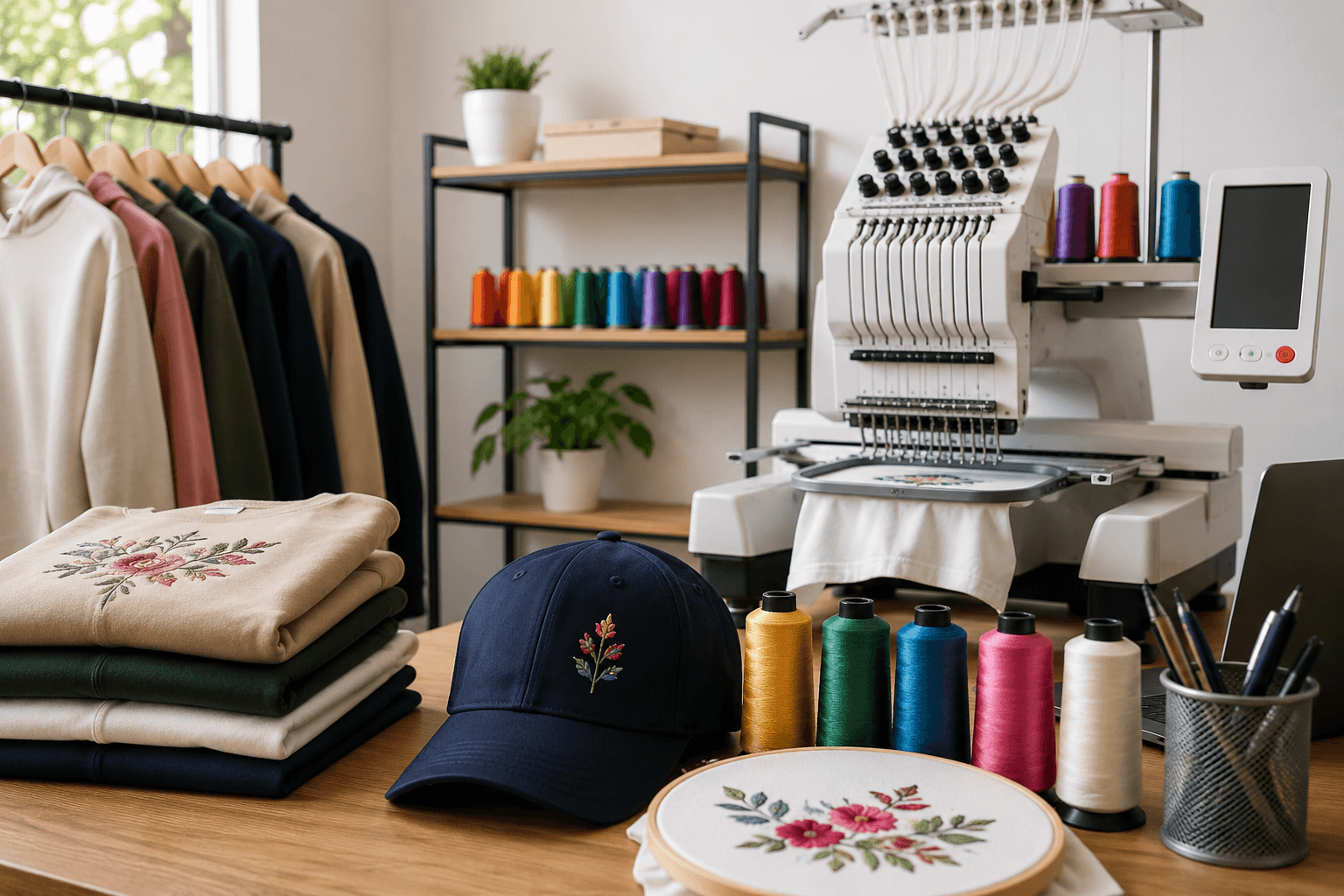
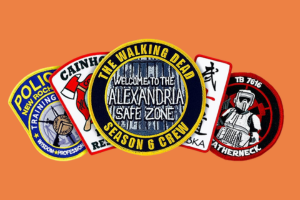
Custom embroidered patches are decorative or identification patches created by stitching thread onto a fabric backing. Instead of printing ink onto the material, embroidery machines use different thread colors and stitch patterns to reproduce your design.
You can create patches featuring:
- Business logos
- Names and initials
- Sports team logos
- School designs
- Club badges
- Military-inspired designs
- Fire department patches
- Motorcycle and biker designs
- Brand artwork
- Event logos
- Personal artwork
- Mascots
- Text and lettering
- Seasonal designs
If you want to understand the basics of custom embroidery, you can explore this guide to what is custom embroidery.
The final patch can then be sewn, ironed, heat-applied, or attached using another backing method depending on the product you order.
Why Search for “Embroidered Patches Custom Near Me”?
Searching for “embroidered patches custom near me” usually means you want convenience, fast communication, local pickup, or a provider familiar with your area.
A local embroidery service may be useful when you:
- Need patches quickly
- Want to see samples before ordering
- Need a small batch
- Prefer local pickup
- Want to discuss your design in person
- Need help selecting patch materials
- Have questions about sizing or backing
- Need patches for a local business or team
- Want to order a repeat batch later
However, proximity should not be the only factor you consider.
The closest embroidery shop is not automatically the best option. A provider farther away may have better digitizing skills, better equipment, more backing options, stronger quality control, and more experience with complicated artwork.
For this reason, it is worth comparing local services with online custom patch providers before placing your order.
You can also read our guide on where to find custom embroidery services near me for additional tips.
How to Find Custom Embroidered Patches Near You
Finding a nearby embroidery service is relatively easy, but choosing the right one requires a little research.
1. Search Google Maps
Start by searching phrases such as:
- Embroidered patches near me
- Custom patches near me
- Custom embroidered patches near me
- Embroidery shop near me
- Custom embroidery services
- Patch maker near me
- Custom logo patches near me
- Personalized embroidered patches
Google Maps can help you identify local businesses, see customer reviews, check photographs, and find contact information.
Pay attention to reviews that specifically mention:
- Patch quality
- Thread quality
- Communication
- Turnaround time
- Design accuracy
- Customer service
- Pricing
- Order fulfillment
A business with many reviews but repeated complaints about poor stitching may not be the best choice.
2. Check the Company’s Portfolio
A portfolio can tell you much more about an embroidery company’s capabilities than a basic advertisement.
Look for examples similar to your intended design.
For example, if you want a detailed motorcycle patch, check whether the provider has experience with detailed logos, lettering, borders, and multiple thread colors.
If you want a business logo patch, look for examples showing clean text and accurate reproduction of logos.
3. Ask About Digitizing
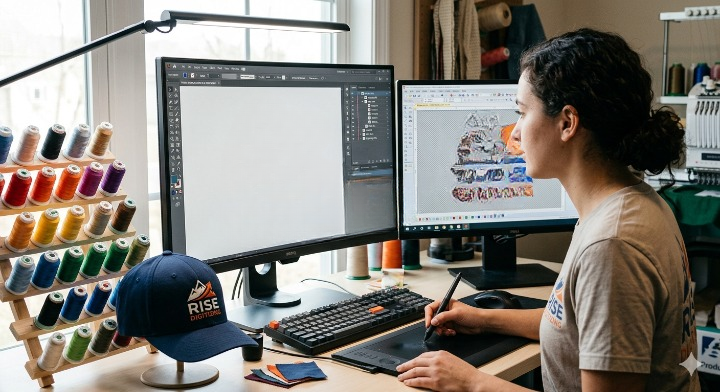
One of the most important parts of professional embroidery is digitizing.
An image file cannot simply be uploaded to an embroidery machine and automatically become a perfect stitched design. Artwork needs to be converted into an embroidery file containing stitch instructions.
You can learn more about this process in our complete guide to embroidery digitizing.
Good digitizing determines:
- Stitch type
- Stitch direction
- Stitch density
- Underlay
- Thread sequence
- Color changes
- Stitch length
- Pull compensation
- Design positioning
Poor digitizing can result in gaps, distorted lettering, thread breaks, excessive density, or an untidy appearance.
For custom patches, this is particularly important because patches often contain borders, small lettering, detailed artwork, and multiple elements.
What Makes a High-Quality Embroidered Patch?
Not every embroidered patch is produced to the same standard.
Several factors affect the finished quality.
Clean Stitching
Stitches should appear consistent and properly formed. There should not be excessive loose thread, visible gaps, or messy edges.
Accurate Design Reproduction
Your finished patch should closely match the approved artwork. Logos, lettering, shapes, and important details should be reproduced accurately.
Strong Borders
Many embroidered patches use a merrowed or stitched border around the outside edge. A clean border gives the patch a finished appearance and helps protect the edges.
Appropriate Stitch Density
Too few stitches can leave areas looking thin. Too many stitches can create excessive bulk and cause puckering.
Professional digitizing balances stitch density according to the fabric, design, size, and thread.
Quality Thread
Thread quality affects color consistency, durability, shine, and overall appearance.
Proper Backing
The backing should match how you intend to use the patch.
Common options include:
- Sew-on backing
- Iron-on backing
- Hook-and-loop backing
- Adhesive backing
- Combination backing
Sew-On vs. Iron-On Custom Patches
When ordering custom embroidered patches, one of the most important decisions is how you want to attach them.
Sew-On Patches
Sew-on patches are attached directly to the garment using thread.
They are a good option for:
- Jackets
- Workwear
- Heavy fabrics
- Uniforms
- Bags
- Denim
- Long-term applications
Sewing generally provides a strong attachment and is especially useful when the garment will be washed frequently.
Iron-On Patches
Iron-on patches use heat-activated adhesive on the back.
They can be convenient because they are relatively easy to apply without sewing.
They are commonly used for:
- Shirts
- Jackets
- Bags
- Fashion clothing
- DIY projects
For detailed application instructions, see our guide on how to iron on embroidered patches.
For garments that experience frequent washing, heavy use, or stretching, sewing the patch in place may provide additional security.
Popular Uses for Custom Embroidered Patches
Custom patches can be used for almost any clothing or textile application.
Business Logo Patches
Businesses can use embroidered logo patches on:
- Employee uniforms
- Work shirts
- Jackets
- Hats
- Bags
- Aprons
- Promotional clothing
A professionally embroidered logo can make workwear look more polished and consistent.
If you want to add a logo to an embroidery project, our guide on how to digitize a logo for embroidery explains the basic process.
Sports Team Patches
Sports teams often use embroidered patches for:
- Team jackets
- Baseball uniforms
- Football clothing
- Training apparel
- Caps
- Equipment bags
Team patches can include names, numbers, mascots, team colors, or logos.
Motorcycle and Biker Patches
Biker patches are another popular application. They can feature club names, symbols, slogans, locations, and personalized artwork.
Read more about custom biker patches to explore common design considerations.
Fire Department Patches
Fire departments and emergency organizations often use embroidered patches for uniforms and identification.
A professional patch can include:
- Department name
- Station number
- City or location
- Badge-style graphics
- Symbols
- Rank information
For more information, see our guide to custom fire department patches.
Name Patches
Personalized name patches are useful for uniforms, workwear, clubs, schools, and organizations.
They can display a person’s:
- Name
- Job title
- Department
- Role
- Organization
Our guide to name patches for uniforms provides more information about this type of patch.
Custom Patch Shapes and Sizes
You are not limited to traditional rectangular patches.
Custom embroidered patches can be produced in different shapes, including:
- Round
- Oval
- Square
- Rectangle
- Shield
- Circle
- Custom outline
- Character shape
- Logo silhouette
The ideal size depends on where you plan to apply the patch.
For example:
Hat patch: Usually needs a compact design that fits within the front panel.
Jacket patch: Can be considerably larger and contain more artwork.
Sleeve patch: Often uses a round, shield, or rectangular format.
Name patch: Usually requires a horizontal shape that accommodates readable text.
Before ordering, measure the area where the patch will be applied.
How the Custom Embroidered Patch Process Works
A professional patch order typically follows several steps.
Step 1: Submit Your Artwork
You provide your artwork to the embroidery company.
Common artwork formats include:
- PNG
- JPG
- SVG
- AI
- EPS
A high-resolution or vector file is often helpful because it gives the digitizer more usable information.
If your artwork needs conversion, you can explore our guide on vector conversion and embroidery digitizing.
Step 2: Choose Your Patch Specifications
You normally need to provide:
- Patch size
- Shape
- Quantity
- Thread colors
- Border style
- Backing type
- Intended garment
- Desired turnaround time
If you are unsure about any of these options, ask the embroidery provider for recommendations.
Step 3: Digitizing
Your artwork is converted into an embroidery file.
The digitizer decides how different parts of the design will be stitched.
This is one of the most important steps in the entire process.
Step 4: Proof or Preview
Many professional providers provide a digital proof before production.
Review the proof carefully for:
- Spelling
- Colors
- Size
- Shape
- Logo details
- Text readability
- Overall layout
Make corrections before production begins.
Step 5: Sample or Production
Depending on the company and order size, a sample may be produced before the complete order.
Once the design is approved, the patches are embroidered and finished.
Step 6: Cutting and Finishing
After embroidery, the patches are cut to their final shape and finished with the selected border and backing.
Step 7: Quality Inspection
The finished patches should be inspected for:
- Loose threads
- Incorrect colors
- Stitching problems
- Uneven borders
- Design errors
- Backing problems
High-quality inspection helps ensure the final order matches the approved design.
How Much Do Custom Embroidered Patches Cost?
The cost of embroidered patches varies significantly depending on the project.
Important pricing factors include:
Patch Size
Larger patches generally require more material and stitching.
Stitch Count
More detailed designs usually require more stitches.
You can learn more about stitch requirements in our article on how many stitches should a logo have.
Quantity
Ordering more patches may reduce the cost per patch because production can become more efficient at higher quantities.
Number of Colors
Designs with multiple thread colors may require additional setup and color changes.
Backing
Different backing options can affect the final price.
Digitizing
If your artwork needs professional digitizing, there may be a separate digitizing charge.
For a broader overview, read our guide on how much does embroidery digitizing cost.
Turnaround Time
Rush production may cost more than standard production.
Because pricing varies from one provider to another, it is better to request a quote based on your exact patch specifications rather than relying on a generic price.
What Artwork Should You Provide for Custom Patches?
The quality of your original artwork can influence the quality of the final embroidered patch.
Ideally, provide:
- High-resolution artwork
- Clear logos
- Correct colors
- Vector artwork when available
- Accurate text
- Simple, recognizable shapes
However, you do not necessarily need a perfect embroidery-ready file.
A professional digitizer can often work from a suitable image and convert it into an embroidery design.
If you only have a picture or logo, you can learn more about how to digitize a picture for embroidery.
Can Any Image Be Turned Into an Embroidered Patch?
Technically, many images can be converted into embroidery designs, but not every image will reproduce perfectly.
Embroidery has physical limitations.
Very small details may need to be simplified. Tiny lettering may become difficult to read. Complex gradients may need to be represented using thread colors and stitch patterns.
A skilled digitizer can modify artwork to make it more suitable for embroidery while maintaining its most important visual characteristics.
This is why professional digitizing is more than simply converting an image file.
Why Professional Digitizing Matters for Custom Patches
If you are searching for embroidered patches custom near me, do not focus exclusively on the production shop. Pay attention to the quality of its digitizing work.
A patch may use expensive thread and quality backing, but poor digitizing can still produce a disappointing result.
Professional digitizing can improve:
- Stitch quality
- Text readability
- Design stability
- Thread management
- Detail reproduction
- Fabric compatibility
- Overall appearance
For businesses ordering branded patches, professional digitizing is especially important because the patch represents the brand.
You can also explore custom embroidery digitizing for more information about creating embroidery-ready artwork.
Local Embroidery Shop vs. Online Custom Patch Service
When looking for custom patches, you may have to decide between a local provider and an online service.
Local Embroidery Service
Advantages:
- Face-to-face communication
- Potential local pickup
- Easy to inspect physical samples
- Convenient for urgent local orders
- Personal consultation
Potential disadvantages:
- Limited design options
- Higher prices for small businesses
- Limited equipment
- Fewer backing choices
- Smaller production capacity
Online Embroidery Service
Advantages:
- Convenient ordering
- Access to specialized digitizers
- Easy digital proofing
- Potentially broader production capabilities
- Easy repeat orders
- No need to travel
Potential disadvantages:
- No immediate physical consultation
- Shipping time
- You may not see the physical product before ordering
The best option depends on your priorities, order quantity, timeline, budget, and design complexity.
Questions to Ask Before Ordering Custom Patches
Before choosing a provider, ask a few important questions.
1. Do You Provide a Digital Proof?
A proof lets you review the design before production.
2. Is Digitizing Included?
Some companies include digitizing in their pricing, while others charge separately.
3. What Backing Options Are Available?
Ask whether they provide sew-on, iron-on, hook-and-loop, or adhesive backing.
4. What Is the Minimum Order?
Some providers accept one custom patch, while others require a minimum quantity.
5. How Long Does Production Take?
Ask for a realistic turnaround time before ordering.
6. Can You Handle Small Text?
If your patch contains detailed lettering, ask whether the provider has experience producing readable small text.
7. Can You Match My Brand Colors?
If the patch represents your business, color consistency is important.
8. Can I Order a Sample?
A sample can help you evaluate quality before placing a large order.
Common Mistakes When Ordering Custom Embroidered Patches
Avoiding a few common mistakes can save time and money.
Choosing Only Based on Price
The cheapest quote is not always the best value.
Poor stitching or weak backing may result in a patch that needs to be replaced.
Using Too Much Detail
Extremely detailed artwork may not translate well at a small size.
Making Text Too Small
Tiny lettering can become difficult to read after stitching.
Ignoring the Fabric
The patch and garment should work together. A heavy patch may not be suitable for very lightweight fabric.
Skipping the Proof
Always review the design proof if one is provided.
Not Checking the Backing
Choose the backing based on how the patch will be used.
Ordering the Wrong Size
Measure the intended application area before ordering.
Custom Embroidered Patches for Small Businesses
Small businesses can use embroidered patches as a cost-effective branding tool.
Instead of putting a large printed logo on every item, businesses can add embroidered patches to selected apparel.
For example:
- Landscaping companies can use logo patches on work jackets.
- Construction companies can use patches on uniforms.
- Restaurants can use patches on aprons and workwear.
- Security companies can use name and identification patches.
- Outdoor businesses can use patches on jackets and bags.
- Clothing brands can create collectible logo patches.
Custom patches can also support consistent branding across multiple types of apparel.
Custom Patches for Clothing Brands
Clothing brands can use embroidered patches as part of their product strategy.
Patches can be:
- Sewn onto jackets
- Added to hats
- Included with orders
- Sold separately
- Used as limited-edition merchandise
- Used for seasonal collections
They can create a premium, tactile appearance that printed graphics may not provide.
If you are interested in apparel customization, you may also want to explore our custom embroidery resources.
Embroidered Patches for Hats
Hats are one of the most popular products for embroidered patches.
A patch can be placed on:
- Baseball caps
- Snapbacks
- Trucker hats
- Bucket hats
- Beanies
- Outdoor hats
The design needs to be appropriately sized because the available surface area on a hat is limited.
If your primary project is headwear, see our guide to custom embroidered patches for hats.
Embroidered Patches for Jackets
Jackets provide much more space for custom patch designs.
Large back patches, sleeve patches, chest patches, and shoulder patches can all be used to create a distinctive appearance.
Embroidered patches work particularly well with:
- Denim jackets
- Work jackets
- Bomber jackets
- Motorcycle jackets
- Team jackets
- Outdoor jackets
For inspiration and placement ideas, read our complete guide to jackets with embroidered patches.
How to Choose the Right Patch Design
A strong patch design should be easy to recognize and appropriate for its size.
Consider the following:
Keep important details visible. Avoid unnecessary tiny elements.
Use contrasting colors. Strong contrast improves readability.
Choose readable fonts. Decorative fonts can become difficult to stitch.
Consider the patch shape. The shape should complement the artwork.
Think about where it will be used. A patch for a hat may need a different design approach from a large jacket patch.
Test the design at actual size. Artwork that looks good on a computer screen may look different when embroidered.
How Long Does It Take to Make Custom Embroidered Patches?
Turnaround time depends on:
- Design complexity
- Patch size
- Quantity
- Digitizing requirements
- Sample approval
- Production capacity
- Backing type
- Shipping
Simple designs and standard orders may be completed faster than large orders with complex artwork.
If you need patches for an event, team, business launch, or special occasion, contact the provider before ordering and confirm the expected completion date.
You can also read how long does embroidery take for more information about embroidery turnaround factors.
How to Care for Embroidered Patches
Proper care can help embroidered patches remain attractive for longer.
Follow the garment manufacturer’s washing instructions.
Generally:
- Avoid unnecessarily harsh washing.
- Do not use excessive heat unless the garment permits it.
- Check iron-on patches after washing.
- Avoid pulling loose threads.
- Store unused patches in a dry location.
- Reinforce heavily used patches with stitching when appropriate.
For garments that receive frequent wear, a sewn-on patch can provide a strong long-term attachment.
Are Custom Embroidered Patches Worth It?
For many applications, yes.
Embroidered patches provide several benefits:
- Professional appearance
- Durable construction
- Customizable designs
- Multiple backing options
- Strong branding potential
- Textured appearance
- Wide range of applications
- Suitable for small and large orders
They are particularly useful when you want your logo, artwork, or identity to stand out from standard printed graphics.
What Should You Look for in a Local Patch Provider?
If your search is specifically “embroidered patches custom near me,” use the following checklist before choosing a company:
- Check customer reviews.
- Review previous patch samples.
- Ask about digitizing.
- Confirm patch sizes.
- Compare backing options.
- Ask about minimum order quantities.
- Request a quote.
- Confirm turnaround time.
- Ask about design proofs.
- Check whether they can handle complex artwork.
- Confirm shipping or local pickup options.
- Ask about repeat-order pricing.
A provider that can answer these questions clearly is more likely to understand your project and deliver the result you expect.
Frequently Asked Questions
What are embroidered patches used for?
Embroidered patches are used for branding, uniforms, sports teams, clubs, jackets, hats, bags, workwear, personal clothing, organizations, and promotional products.
Can I order one custom embroidered patch?
Some embroidery providers accept single-patch orders, while others have minimum quantities. Always check the provider’s minimum order policy.
Can I use my own logo?
Yes. You can generally submit your own logo or artwork for digitizing and production.
What file do I need for an embroidered patch?
You can often start with PNG, JPG, PDF, SVG, AI, or EPS artwork. The artwork will typically need to be digitized into an embroidery machine format before production.
Are embroidered patches durable?
Quality embroidered patches can be very durable when they are properly digitized, produced, finished, and attached to the garment.
Is an iron-on patch better than a sew-on patch?
Neither is universally better. Iron-on patches are convenient, while sew-on patches are often preferred for heavy-use garments and applications requiring stronger long-term attachment.
Can embroidered patches be used on hats?
Yes. Custom embroidered patches are commonly used on baseball caps, snapbacks, trucker hats, beanies, and other headwear.
Can I create a patch from a photo?
A photo can often be converted into an embroidery design, but it may need simplification because embroidery cannot reproduce every photographic detail exactly.
How do I find the best embroidered patches custom near me?
Search local embroidery providers, review their portfolios, compare customer reviews, ask about digitizing quality, confirm pricing and turnaround times, and request a sample or proof when possible.
Final Thoughts
Finding embroidered patches custom near me is easy, but finding a provider that delivers excellent quality requires more than choosing the closest shop.
Look for a service that understands embroidery digitizing, offers suitable backing options, provides clear proofs, uses quality materials, and has experience producing designs similar to yours.
Whether you need business logo patches, sports patches, name patches, biker patches, fire department patches, jacket patches, or custom patches for hats, professional digitizing and production can make a major difference in the finished result.
If you are comparing different embroidery options, start by reviewing custom embroidered patches and learning more about the embroidery places near me available for custom embroidery work.
For businesses and individuals who already have artwork, understanding the embroidery digitizing process can also help you make better decisions before ordering.
The right combination of design, digitizing, thread, backing, stitching, and finishing can turn your artwork into a professional embroidered patch that looks great and lasts.