
When choosing a printing method for custom T-shirts, hoodies, uniforms, promotional clothing, or branded apparel, two popular options are screen printing and DTF (Direct-to-Film) printing.
Both methods can produce high-quality designs, but they work differently and are better suited to different types of projects.
So, is screen printing better than DTF?
The answer depends on what you need.
Screen printing is often the better choice for large orders, simple designs, strong durability, and a classic printed finish. DTF printing can be a better option for colorful artwork, detailed designs, smaller orders, gradients, and projects that require more flexibility.
In this guide, we compare screen printing and DTF printing based on quality, durability, cost, design complexity, order size, color, fabric compatibility, production time, and overall value.
What Is Screen Printing?
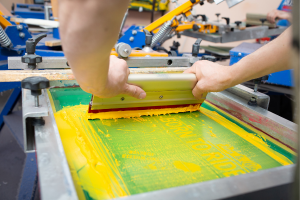
Screen printing is a traditional apparel printing method that uses a mesh screen, stencil, ink, and squeegee to transfer a design onto fabric.
A separate screen is generally prepared for each color in the design. Ink is then pushed through the screen onto the garment.
Screen printing has been used for decades and remains one of the most popular methods for producing custom apparel.
If you are new to the process, learn more about what screen printing is and how it is commonly used for custom T-shirts.
How Screen Printing Works
The basic screen-printing process includes:
- Preparing the artwork
- Separating the artwork into colors
- Creating screens
- Preparing the garment
- Applying ink through the screens
- Curing the printed ink
- Inspecting the finished garment
Screen printing works particularly well when the same design needs to be printed on many garments.
What Is DTF Printing?
DTF stands for Direct-to-Film.
Instead of printing directly onto the garment, the design is first printed onto a special transfer film. A layer of adhesive powder is then applied, and the design is cured.
The finished transfer is placed onto the garment and applied using a heat press.
Unlike traditional screen printing, DTF can reproduce detailed artwork and multiple colors without requiring a separate screen for every color.
This makes DTF particularly useful for:
- Full-color artwork
- Detailed illustrations
- Photographic designs
- Gradients
- Small orders
- Personalized apparel
- Multi-color logos
Screen Printing vs. DTF: Quick Comparison
| Feature | Screen Printing | DTF Printing |
|---|---|---|
| Best for | Large orders and bold designs | Detailed designs and smaller orders |
| Setup | Requires screen preparation | Requires digital artwork and transfer preparation |
| Full-color designs | Possible but can require more setup | Excellent |
| Gradients | More complicated | Excellent |
| Small orders | May be less economical | Usually more practical |
| Large orders | Very cost-effective | Can be more expensive per garment |
| Durability | Excellent with proper curing | Good to excellent |
| Design detail | Very good | Excellent |
| Color flexibility | Depends on process | Very high |
| Personalization | Less convenient | Very convenient |
| Production workflow | Screen and ink based | Digital transfer and heat press based |
Is Screen Printing Better Than DTF?
Screen printing is not universally better than DTF.
Instead, each printing method has specific advantages.
Screen printing is usually better when:
- You have a large apparel order
- Your design uses relatively few colors
- You want excellent durability
- You need consistent production across many garments
- You want a traditional screen-printed appearance
- Cost per garment is important for bulk orders
DTF is usually better when:
- You have a small order
- Your design contains many colors
- Your artwork includes gradients
- You need detailed images
- You want individual personalization
- You need a flexible printing method for different garments
The best option depends on your specific project.
Which Has Better Print Quality: Screen Printing or DTF?
Both methods can produce excellent results, but they have different strengths.
Screen Printing Quality
Screen printing is known for producing bold, vibrant, and highly durable prints.
It is particularly effective for:
- Logos
- Text
- Simple illustrations
- Sports graphics
- Brand designs
- Bold artwork
Because ink is applied directly to the garment, screen printing can produce a strong and distinctive finish.
For businesses looking for professional apparel printing, screen printing can be an excellent choice.
DTF Print Quality
DTF printing is especially strong when artwork contains intricate details and many colors.
It can reproduce:
- Fine details
- Small text
- Gradients
- Shadows
- Multiple colors
- Complex illustrations
- Photographic artwork
This makes DTF a strong option for designs that would require numerous screens in traditional screen printing.
Which Is More Durable: Screen Printing or DTF?
Durability is one of the most important considerations when choosing an apparel printing method.
Screen printing has a strong reputation for durability. When quality ink is properly applied and cured, screen-printed designs can withstand repeated washing and regular use.
DTF prints can also be durable, especially when the transfer is produced and heat-pressed correctly.
However, durability depends on more than the printing method.
Factors include:
- Ink or transfer quality
- Garment quality
- Curing or heat-press settings
- Washing conditions
- Detergent
- Frequency of washing
- Fabric type
- Application quality
For large-scale workwear, uniforms, and heavily used garments, screen printing is often considered a strong choice.
Is DTF More Durable Than Screen Printing?
Generally, screen printing has a long-standing reputation for excellent durability, particularly when applied correctly.
However, modern DTF transfers can also provide good durability and may be suitable for everyday apparel.
Rather than assuming one method will always last longer, consider the quality of the materials and production process.
A poorly produced screen print may not outperform a properly produced DTF transfer.
Which Is Cheaper: Screen Printing or DTF?
Cost depends heavily on order size and design complexity.
Screen Printing Costs
Screen printing usually involves setup costs because screens need to be prepared.
For a small order, this setup can make the cost per shirt relatively high.
However, once the screens are prepared, producing a large quantity of identical garments can become very economical.
This is one reason screen printing is widely used for bulk apparel orders.
You can learn more about pricing in this screen printing prices guide.
DTF Costs
DTF printing does not require the same type of screen setup.
This makes it particularly attractive for:
- Small orders
- One-off shirts
- Personalized products
- Multiple designs
- Test products
However, producing a very large quantity of identical garments may make screen printing more economical depending on the printer, supplier, artwork, and production requirements.
Screen Printing vs. DTF for Small Orders
If you only need a few shirts, DTF may be the more convenient choice.
For example, imagine you need:
- 1 custom shirt
- 5 family reunion shirts
- 10 personalized shirts
- A few samples for a new brand
Setting up screens for a small quantity may not be as efficient as creating a DTF transfer.
DTF allows the design to be printed digitally and transferred onto the garments without the same screen setup.
Screen Printing vs. DTF for Large Orders
For large orders featuring the same design, screen printing can have a major advantage.
Suppose a business needs 500 shirts with the same two-color logo.
The initial setup for screen printing can be spread across hundreds of garments, reducing the average production cost.
This is why screen printing remains popular for:
- Company uniforms
- Event T-shirts
- School shirts
- Sports teams
- Promotional apparel
- Large merchandise orders
For additional guidance, see how to choose a screen printing service near you.
Which Is Better for Detailed Designs?
DTF generally has an advantage when it comes to highly detailed artwork.
A complex image may contain:
- Numerous colors
- Fine lines
- Small details
- Shadows
- Gradients
- Photographic elements
Reproducing such artwork with screen printing may require multiple color separations and additional production steps.
DTF can reproduce this type of digital artwork more directly.
For detailed photographic or highly colorful artwork, DTF can therefore be a practical option.
Which Is Better for Simple Logos?
Screen printing can be an excellent choice for simple logos.
Consider a business logo containing:
- One or two colors
- Bold lettering
- Simple shapes
- Clean lines
Screen printing can reproduce this type of artwork efficiently, particularly when hundreds of garments are required.
If your goal is to print a simple brand logo on a large quantity of T-shirts, screen printing may provide better production efficiency.
You can also explore this guide on logo printing on T-shirts for additional apparel branding ideas.
Which Is Better for Full-Color Designs?
DTF generally has an advantage for full-color designs.
Because the artwork is digitally printed onto transfer film, complex color combinations can be reproduced without creating a separate traditional screen for each color.
This makes DTF useful for:
- Artwork with many colors
- Illustrations
- Digital paintings
- Photographs
- Color gradients
- Complex branding graphics
If your design looks more like a digital image than a simple logo, DTF may be easier to produce.
Which Is Better for Gradients?
Gradients can be more challenging with traditional screen printing.
Screen printing can reproduce gradient effects using specialized techniques, but the process can require additional preparation.
DTF is generally more straightforward for designs containing:
- Smooth color transitions
- Shadows
- Fades
- Complex tonal variations
For this reason, DTF is often a strong choice for modern graphic designs with sophisticated color effects.
Which Works With More Types of Clothing?
Both methods can be used on a wide range of apparel, but compatibility depends on the specific garment and printing process.
Screen printing is commonly used on:
- Cotton T-shirts
- Hoodies
- Sweatshirts
- Tote bags
- Uniforms
- Sports apparel
DTF can also be applied to many garments, including:
- Cotton
- Polyester
- Blends
- Hoodies
- T-shirts
- Jackets
- Promotional apparel
The correct application settings are important for achieving a durable result.
If you are considering screen printing on different garments, see what types of garments are best for screen printing.
Is Screen Printing Better for Cotton?
Screen printing is particularly popular for cotton apparel.
Cotton T-shirts and sweatshirts have long been common choices for screen printing because the ink can produce a strong printed appearance.
If you are printing a large quantity of cotton T-shirts with the same design, screen printing can be an efficient option.
Is DTF Better for Polyester?
DTF can be a useful option for polyester and blended garments because the transfer process can work across a variety of apparel materials.
However, garment composition, heat sensitivity, transfer quality, and application settings should always be considered.
The correct method depends on the exact fabric and production requirements.
Which Has a Softer Feel: Screen Printing or DTF?
The final feel depends on the type and amount of ink or transfer material used.
A properly produced screen print can feel relatively soft, particularly when the design uses an appropriate ink and application technique.
DTF transfers can sometimes create a noticeable film-like feel because the design sits on top of the garment.
The difference becomes more noticeable with large solid DTF prints.
For people who prioritize a traditional printed-shirt feel, screen printing may have an advantage in certain applications.
Which Is Better for Breathability?
Breathability depends partly on how much of the garment is covered by the print.
A large, heavy print can affect the feel and breathability of the fabric regardless of the printing method.
Screen printing can be produced with different ink types and application approaches, while DTF creates a transfer layer over the garment.
For large prints on lightweight shirts, consider both the size of the artwork and the printing method.
Screen Printing vs. DTF for T-Shirts
T-shirts are one of the most common applications for both printing methods.
Choose Screen Printing for T-Shirts When:
- You need a large quantity
- The artwork has a limited number of colors
- Durability is important
- You want a classic printed finish
- You want lower per-shirt costs on bulk orders
Choose DTF for T-Shirts When:
- You need only a few shirts
- The design is highly detailed
- You need many colors
- You want gradients
- Each shirt needs personalization
- You want fast design changes
For more T-shirt printing ideas, explore these custom T-shirt design ideas.
Screen Printing vs. DTF for Hoodies
Both methods can work well for hoodies.
Screen printing is often preferred for large hoodie orders, especially when the design is bold and relatively simple.
DTF can be useful for detailed hoodie artwork or smaller quantities.
The thickness of the hoodie should also be considered because the printing process needs to be appropriate for the garment.
Screen Printing vs. DTF for Work Uniforms
Screen printing is often a strong option for work uniforms when the same company logo needs to be printed on a large number of garments.
For example, a business might need:
- 100 employee shirts
- 200 branded polos
- 500 event uniforms
When the design remains consistent, screen printing can offer production efficiency.
For personalized uniforms where names or individual designs change frequently, DTF may provide greater flexibility.
Screen Printing vs. DTF for Sports Teams
Both methods can work for sports apparel.
Screen printing can be effective when an entire team needs the same logo or graphic.
DTF can be useful when each garment requires different names, numbers, or detailed graphics.
If personalization is a major requirement, DTF can reduce the need for separate production setups.
Which Is Faster: Screen Printing or DTF?
Production speed depends on order size, equipment, artwork, and workflow.
For a single or small number of garments, DTF can often provide a simpler production process because there is no traditional screen setup.
For large quantities of identical garments, screen printing can become extremely efficient once the screens are prepared.
Therefore:
Small order → DTF may be faster.
Large identical order → Screen printing may be more efficient.
Screen-printing ink also needs proper drying or curing. See how long screen printing ink takes to dry for more information.
Which Is Better for Customization?
DTF generally has an advantage for personalization.
Imagine producing 20 shirts where every shirt contains:
- A different name
- A different number
- A different image
- A different color combination
Digital printing makes these changes easier to manage.
Screen printing is more efficient when the same design is repeated many times.
Which Is Better for Print-on-Demand Businesses?
DTF can be attractive for print-on-demand businesses because it works well with small quantities and personalized designs.
A business can create different designs without maintaining a large inventory of pre-printed garments.
This makes DTF particularly useful for:
- Online clothing stores
- Etsy-style businesses
- Custom merchandise
- Personalized gifts
- Small apparel brands
Screen printing can still be valuable when a particular design becomes popular enough to justify a large production run.
Which Is Better for Small Businesses?
The answer depends on the business model.
A small business selling personalized T-shirts may benefit from DTF because it can produce different designs in smaller quantities.
A company producing hundreds or thousands of identical promotional shirts may benefit from screen printing.
Small businesses should consider:
- Average order size
- Number of designs
- Design complexity
- Garment types
- Budget
- Production equipment
- Customer expectations
Screen Printing vs. DTF: Environmental Considerations
Environmental impact depends on the complete production process, materials, equipment, energy use, waste, and production volume.
Screen printing can involve:
- Screens
- Emulsion
- Ink
- Cleaning chemicals
- Water
- Setup waste
DTF involves:
- Transfer film
- Printing inks
- Adhesive powder
- Heat
- Transfer waste
Neither method should automatically be considered environmentally superior in every situation.
The best approach is to evaluate the specific production workflow and minimize unnecessary waste.
Common Advantages of Screen Printing
Screen printing offers several important benefits.
1. Excellent for Bulk Orders
The process becomes increasingly efficient as the order size increases.
2. Strong Durability
Quality screen printing can withstand regular wear and washing.
3. Vibrant Prints
Screen printing can produce strong, bold colors.
4. Professional Appearance
It is widely used for commercial apparel and branded merchandise.
5. Cost-Effective at Scale
Large orders can reduce the average cost per garment.
Disadvantages of Screen Printing
Screen printing also has limitations.
Setup Requirements
Screens need to be prepared before printing.
Less Convenient for Small Orders
Setup costs can make small orders less economical.
Complex Multi-Color Designs
Highly detailed artwork can require additional production work.
Personalization Can Be Difficult
Printing many unique designs may be less efficient.
Common Advantages of DTF
DTF has become popular because of its flexibility.
1. Excellent Detail
Digital artwork can be reproduced with fine details.
2. Full-Color Printing
Complex color combinations are easier to handle.
3. Good for Small Orders
There is no traditional screen setup for every design.
4. Personalization
Individual garments can easily receive different artwork.
5. Flexible Artwork
Photographs, gradients, and illustrations can be suitable for DTF.
Disadvantages of DTF
DTF also has some limitations.
Transfer Feel
Large designs may create a noticeable layer on the garment.
Film and Powder
The process requires transfer film and adhesive powder.
Bulk Cost
For very large identical orders, screen printing may be more economical.
Application Quality Matters
Poor heat-press settings can affect the final result.
Screen Printing vs. DTF: Which Should You Choose?
Use this simple decision guide.
Choose Screen Printing If:
You need 50, 100, 500, or more identical garments.
Screen printing can become more economical as quantity increases.
Your design has few colors.
Simple logos and bold graphics are ideal.
Durability is a priority.
Screen printing is well suited to workwear, uniforms, and frequently washed apparel.
You want a traditional printed appearance.
Screen printing offers a classic apparel-printing finish.
Choose DTF If:
You need a small quantity.
DTF is practical for small orders and one-off products.
Your design has many colors.
Full-color digital artwork is one of DTF’s strengths.
Your artwork contains gradients or fine details.
DTF can reproduce complex digital artwork effectively.
You need personalization.
Names, numbers, and individual designs are easier to manage.
You operate a print-on-demand business.
DTF provides flexibility for producing different designs without traditional screen setup.
Can You Combine Screen Printing and DTF?
Yes.
A business does not necessarily need to choose only one printing method.
Different methods can be used for different products or stages of the business.
For example:
- DTF for samples
- DTF for personalized orders
- Screen printing for bulk orders
- Screen printing for simple logos
- DTF for complex artwork
Using both methods can allow an apparel business to serve a wider range of customers.
Screen Printing vs. DTF vs. DTG
DTF is not the only digital apparel-printing alternative to screen printing.
Another popular method is DTG (Direct-to-Garment).
DTG prints directly onto the garment rather than transferring the artwork through film.
If you are comparing digital printing methods, read screen printing vs. DTG printing.
The three methods have different strengths:
| Method | Best For |
|---|---|
| Screen Printing | Bulk orders and bold designs |
| DTF | Detailed designs and flexible quantities |
| DTG | Detailed direct-to-garment digital printing |
How Much Does Screen Printing Cost?
Screen-printing prices vary depending on:
- Number of garments
- Number of colors
- Print locations
- Garment type
- Design complexity
- Order quantity
- Supplier
- Ink type
Large orders generally reduce the average cost per shirt because setup expenses can be distributed across more garments.
You can learn more about how much screen printing costs per shirt before deciding on your production method.
How to Choose a Screen Printing Service
If you decide that screen printing is the better choice, compare providers carefully.
Look at:
- Previous work
- Printing quality
- Garment options
- Pricing
- Minimum order quantity
- Turnaround time
- Color accuracy
- Customer reviews
- Print durability
- Artwork requirements
A professional provider should be able to explain which printing process is most appropriate for your design.
You can also compare top-rated screen printing companies for custom apparel.
What About Screen Printing at Home?
Screen printing can be performed at home with the right equipment and supplies.
However, achieving consistent professional results requires practice.
You may need:
- Screens
- Squeegee
- Ink
- Emulsion
- Exposure equipment
- Drying or curing equipment
- Printing surface
If you are interested in DIY printing, see how to do screen printing at home.
Final Verdict: Is Screen Printing Better Than DTF?
So, is screen printing better than DTF?
There is no single answer for every project.
Screen printing is generally better for large orders, simple designs, strong durability, and cost efficiency at scale.
DTF is generally better for small orders, complex artwork, full-color designs, gradients, personalization, and flexible production.
The right choice depends on your:
- Order quantity
- Artwork
- Number of colors
- Garment type
- Budget
- Desired finish
- Durability requirements
- Personalization needs
- Production timeline
If you are ordering hundreds of identical T-shirts with a simple logo, screen printing is likely to be the more practical option.
If you need a few highly detailed, full-color, personalized shirts, DTF may be the better choice.
Ultimately, screen printing is not simply “better” than DTF—each technology is better suited to different applications. Understanding the differences allows you to choose the method that provides the best balance of quality, cost, durability, and production efficiency for your project.
Frequently Asked Questions
Is screen printing better quality than DTF?
Both can provide high-quality results. Screen printing is particularly strong for bold, durable prints, while DTF is excellent for detailed, colorful, and complex artwork.
Is DTF cheaper than screen printing?
DTF can be more economical for small orders because it does not require traditional screen setup. Screen printing can become more cost-effective for large quantities of identical garments.
Does DTF last longer than screen printing?
Screen printing has a strong reputation for durability. However, high-quality DTF prints can also last through repeated use and washing when correctly produced and applied.
Which is better for T-shirts, DTF or screen printing?
For large orders with simple designs, screen printing is often the better option. For small quantities or detailed full-color artwork, DTF can be more practical.
Which is better for hoodies?
Both can work well. Screen printing is excellent for bulk hoodie orders, while DTF can be useful for detailed designs and smaller quantities.
Is DTF better for detailed designs?
Yes. DTF is generally well suited to complex artwork, fine details, gradients, photographs, and designs with many colors.
Is screen printing better for bulk orders?
Yes. Screen printing is particularly efficient when producing large quantities of the same design.
Can DTF be used for personalized shirts?
Yes. DTF is well suited to personalized apparel because individual designs, names, numbers, and graphics can be produced digitally.
Which printing method is best for a small business?
It depends on the business model. DTF may be better for print-on-demand and personalized products, while screen printing may be better for businesses producing large quantities of the same design.
Can you use both screen printing and DTF?
Yes. Many apparel businesses can benefit from using different printing methods for different order types.
Is screen printing better than DTF for logos?
For simple logos printed in large quantities, screen printing can be an excellent choice. For detailed, full-color logos or small personalized orders, DTF may be more suitable.