If you’ve ever searched “Is embroidery the same as needlepoint?”, you’re certainly not alone. Many beginners, hobbyists, and even business owners often confuse these two popular needlecraft techniques because both involve using a needle and thread to create decorative designs.
The short answer is no.
Although embroidery and needlepoint share some similarities, they are different in their purpose, fabric, stitching techniques, finished appearance, and applications.
Understanding these differences is important whether you’re creating handmade artwork, purchasing custom embroidered apparel, choosing the right embroidery machine, or planning to digitize a logo for commercial embroidery.
At RiseDigitizing, we work with embroidery professionals, apparel brands, promotional product companies, and hobbyists every day. We know that selecting the right embroidery technique can significantly impact the final quality of your project.
In this complete guide, you’ll learn:
No, embroidery is not the same as needlepoint.
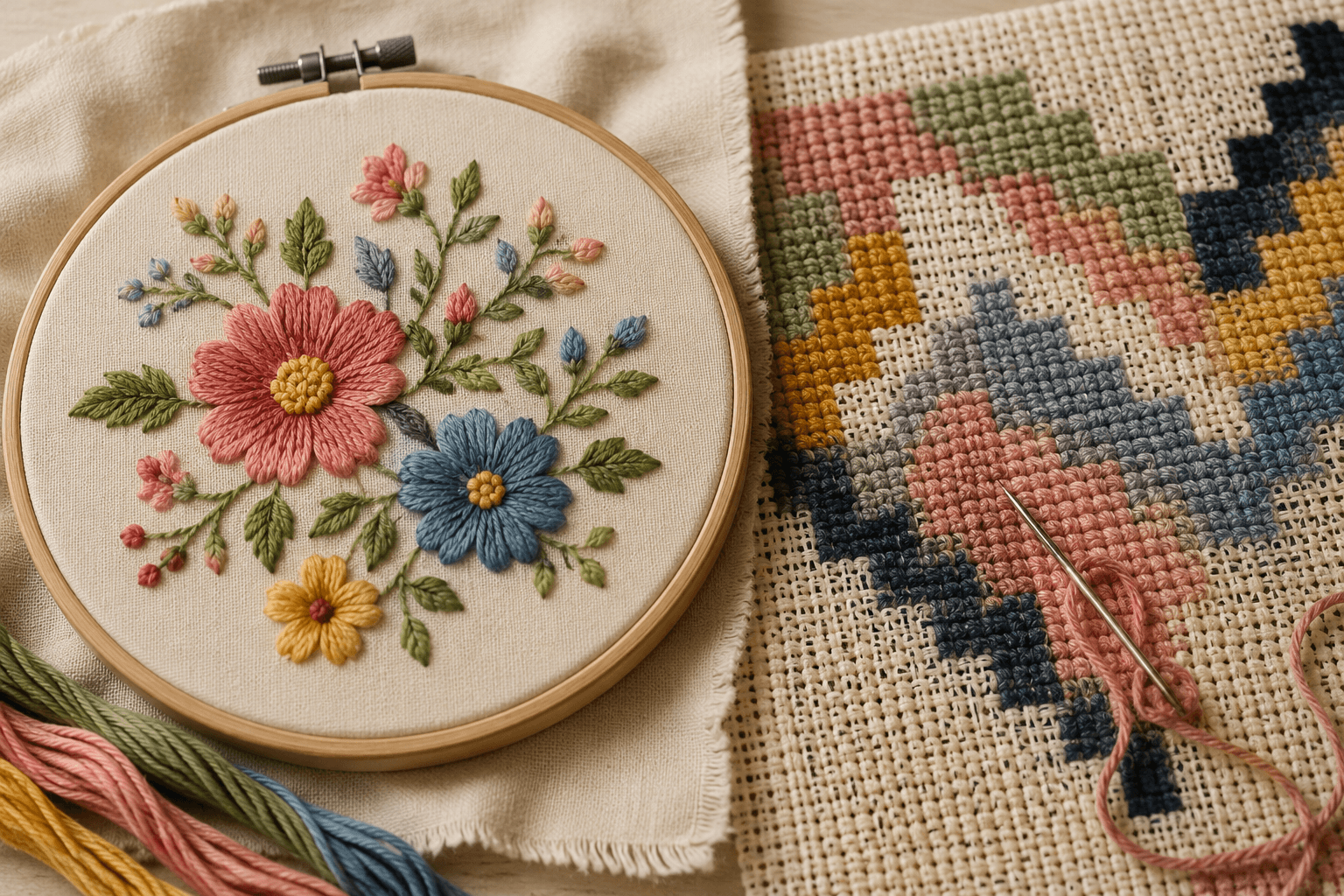
Embroidery is a broad decorative art where stitches are sewn onto fabric to create patterns, logos, lettering, or artwork.
Needlepoint is a specific type of counted-thread canvas embroidery that completely covers a stiff canvas using particular stitches.
Think of it this way:
Embroidery is the category. Needlepoint is one specialized form of decorative needlework—but it is not traditional embroidery used on garments.
Embroidery is the process of decorating fabric using thread stitched directly onto materials like:
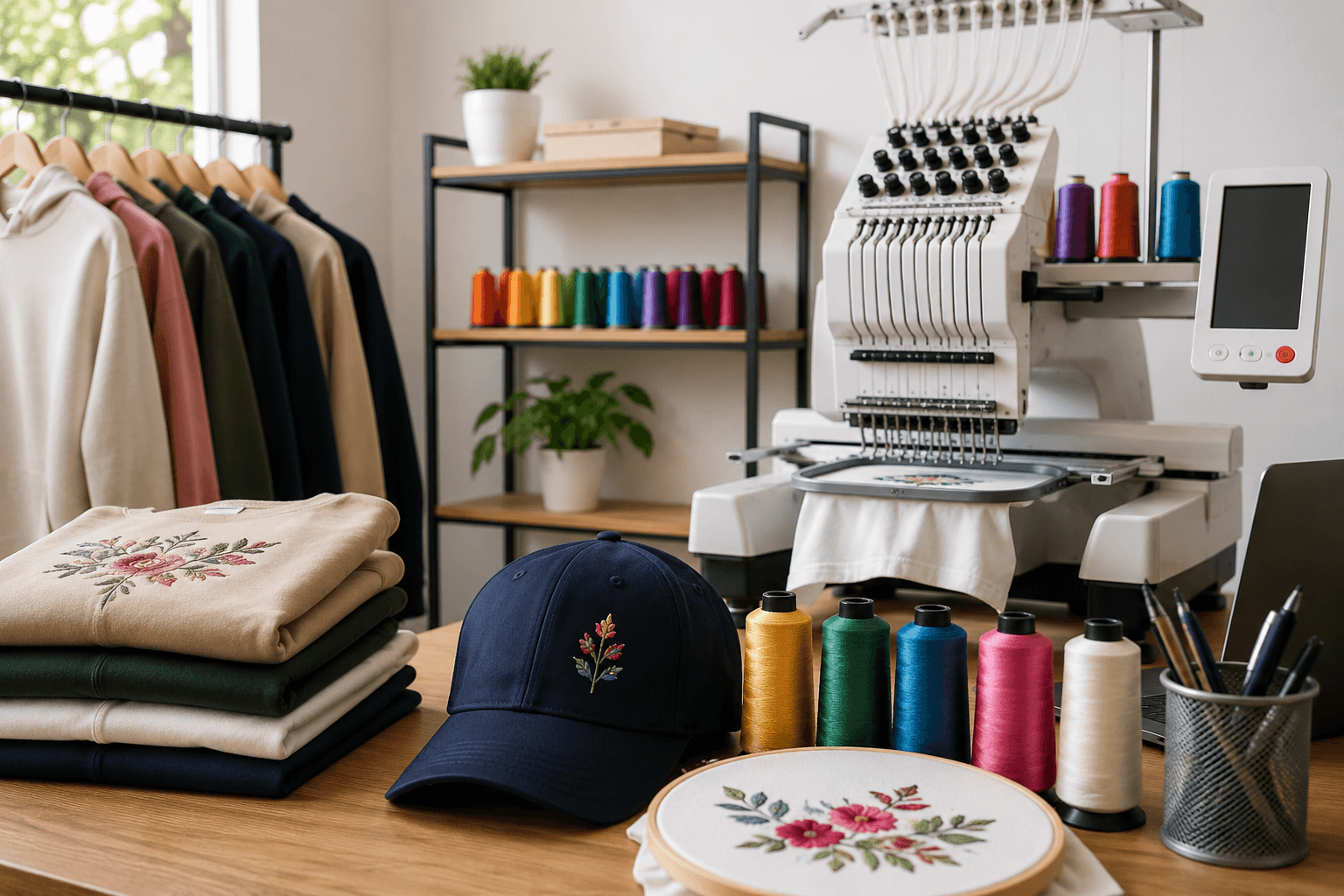
Modern embroidery may be done by hand or with computerized embroidery machines.
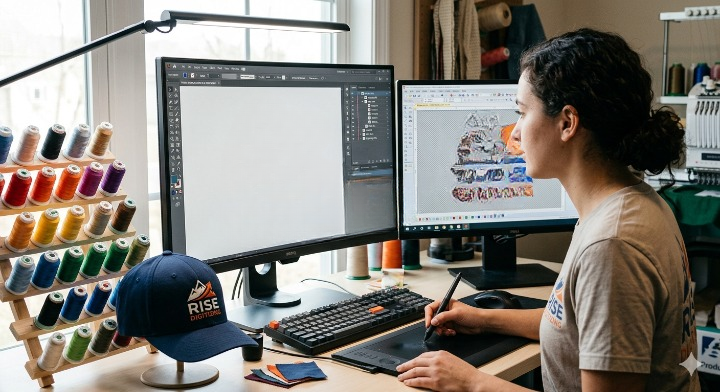
Today, commercial embroidery is powered by embroidery digitizing software that converts artwork into machine-readable stitch files.
If you’re unfamiliar with the digitizing process, our complete guide on How to Digitize a Logo for Embroidery explains how artwork becomes an embroidery-ready file:
https://risedigitizing.com/how-to-digitize-a-logo-for-embroidery/
Professional embroidery is commonly used for:
Needlepoint is a type of canvas embroidery.
Instead of stitching directly onto fabric, the stitches completely cover a woven canvas made from evenly spaced holes.
Unlike decorative embroidery where only portions of fabric receive stitching, needlepoint fills almost the entire surface.
Popular needlepoint projects include:
Needlepoint emphasizes texture and complete coverage rather than free-form decorative stitching.
Embroidery has existed for thousands of years.
Ancient civilizations including:
used embroidery to decorate royal garments, ceremonial clothing, military uniforms, and religious textiles.
Today, embroidery has evolved dramatically with computerized machines capable of producing thousands of precise stitches every minute.
Businesses now rely on professional digitizing services before production begins. If you’re curious about pricing, read our guide on How Much Does Embroidery Digitizing Cost (2026):
https://risedigitizing.com/how-much-does-embroidery-digitizing-cost-2026/
Needlepoint also dates back centuries.
Historically, it became especially popular across Europe during the 16th and 17th centuries.
Unlike embroidery, needlepoint was primarily associated with decorative home furnishings rather than wearable clothing.
Many museums still display centuries-old needlepoint tapestries that remain remarkably preserved.
| Feature | Embroidery | Needlepoint |
|---|---|---|
| Fabric | Cotton, polyester, denim, leather, fleece | Canvas |
| Coverage | Partial decoration | Full canvas coverage |
| Technique | Decorative stitches | Counted canvas stitches |
| Equipment | Hand or machine | Mostly hand stitched |
| Purpose | Clothing, logos, patches | Decorative artwork |
| Precision | Free-form | Grid-based |
| Commercial Use | Very common | Rare |
| Digitizing Required | Yes (machine embroidery) | No |
Embroidery works on many materials.
Examples include:
Needlepoint, however, almost always begins with:
The fabric itself determines the stitching method.
Embroidery includes hundreds of decorative stitches such as:
Modern embroidery machines automatically create these stitches after reading a digitized embroidery file.
If you’re interested in machine-ready embroidery files, check out our guide on What Is the Process for Converting an Image into an Embroidery File?
https://risedigitizing.com/what-is-the-process-for-converting-an-image-into-an-embroidery-file/
Needlepoint typically relies on repetitive stitches including:
These stitches cover every section of the canvas.
Today’s embroidery industry consists of two main categories.
Perfect for:
Ideal for:
Machine embroidery requires embroidery digitizing before production.
If you’re new to digitizing, our beginner’s guide explains everything:
https://risedigitizing.com/what-is-digitizing-for-embroidery/
Not in the traditional sense.
Commercial embroidery machines are designed to create embroidery stitches, not authentic hand-worked needlepoint.
Although software can imitate certain textures, true needlepoint remains primarily handcrafted.
For beginners:
Needlepoint is generally easier because:
Embroidery can be more challenging because it requires:
However, machine embroidery dramatically reduces the learning curve once artwork has been digitized correctly.
Embroidery wins by a wide margin.
Almost every embroidered garment you see—including:
uses embroidery—not needlepoint.
For custom apparel, embroidery provides:
If you’re planning embroidered clothing, you may also enjoy our guide on What Is Custom Embroidery?
https://risedigitizing.com/what-is-custom-embroidery/