
Whether you are launching a custom apparel brand, creating corporate merch, or stepping up your DIY garment game, you have likely run into a major technical roadblock: your commercial embroidery machine cannot read a standard JPG or PNG file. It requires a specialized digital map.
Transforming a creative illustration into a machine-readable format is known as embroidery digitizing. But if you are outsourcing this highly technical task, one major question stands in your way: How much does embroidery digitizing cost?
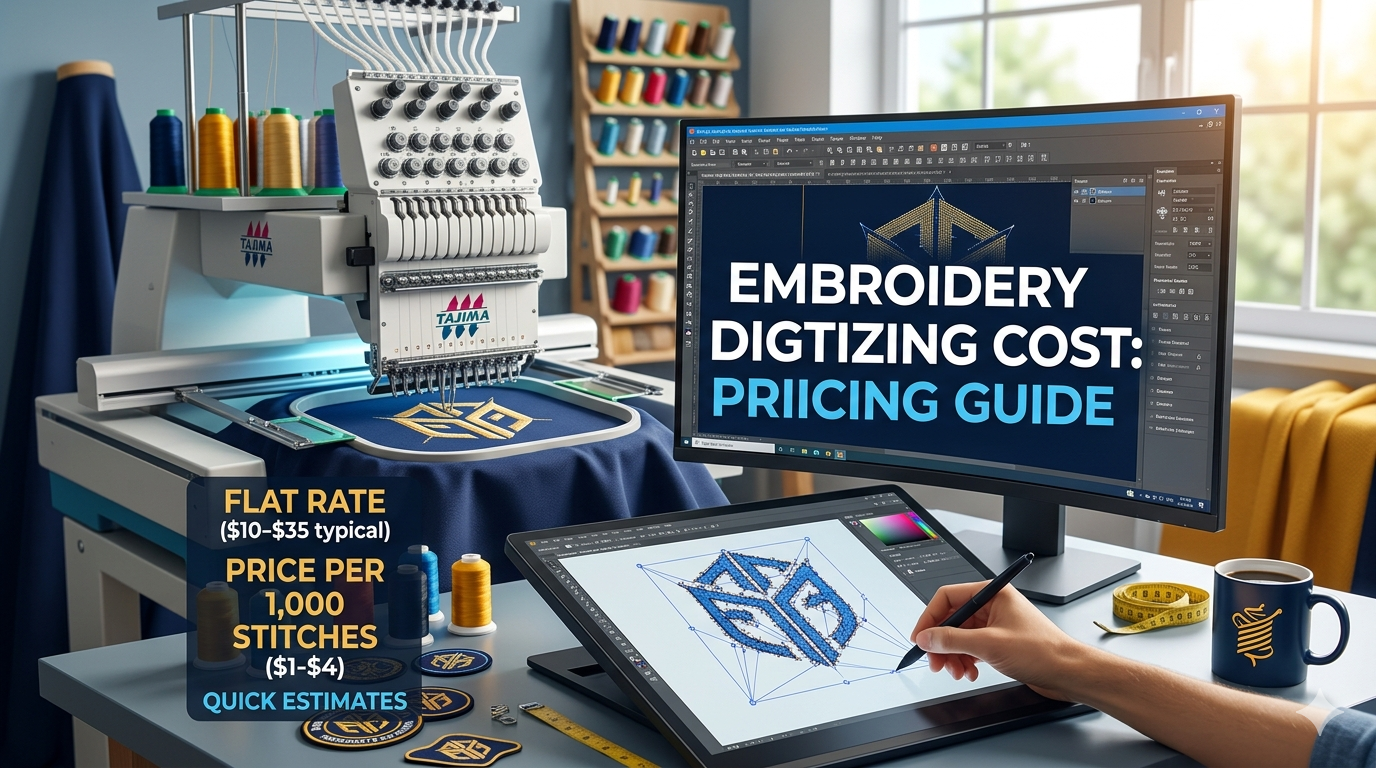
On average, commercial embroidery digitizing costs range from $10 to $75 for standard logos, while massive, highly detailed designs like jacket backs can run between $75 and $150+.
Because pricing models fluctuate wildly across the industry, navigating the quotes can feel incredibly confusing. This complete guide breaks down exactly what you can expect to pay, the primary pricing models used by professionals, and how to avoid overpaying for your files.
Digitizing agencies and freelance artists generally structure their rates using one of three transparent frameworks. Knowing these models will help you choose the best partner for your specific project scale.
Many modern custom embroidery digitizing services prefer flat-rate pricing. It offers predictable expenses for businesses and individuals alike.
This is the traditional commercial model. The final cost depends entirely on the density and physical footprint of the embroidery.
Hourly rates are typically reserved for elite boutique digitizers or highly experimental, artistic embroidery projects.
The physical location of your embroidery dictates its dimensions and stitch count. To give you a practical baseline, here is a quick reference table outlining average industry costs based on common project placements.
| Placement Type | Average Dimensions | Estimated Stitch Count | Average Cost Range |
|---|---|---|---|
| Left Chest / Polo Logo | 3.5″ x 3.5″ | 4,000 – 10,000 | $10 – $25 |
| Cap / Hat (Front) | 2.25″ x 4.5″ | 5,000 – 12,000 | $15 – $35 |
| Sleeve Printing / Accent | 2.0″ x 3.0″ | 3,000 – 7,000 | $10 – $20 |
| Jacket Back (Large) | 10″ x 10″ | 30,000 – 80,000+ | $75 – $150+ |
Two completely different graphics of the exact same physical size can carry vastly distinct price tags. This variation happens because several hidden variables dictate how much labor must go into the embroidery file conversion.
A minimalist, clean typographic logo is incredibly straightforward to map out. However, an intricate coat of arms featuring fine gradient shading, tiny text, and overlapping elements requires hours of manual stitch placement. If a design has elements that are too small to render cleanly in thread, the digitizer must manually adjust the proportions of the artwork to make it physically viable.
Solid blocks of background filling (tatami stitches) consume significantly more time and digital data than open, airy line work (run stitches). Higher stitch density equals longer digitizing times and more field testing to ensure the fabric doesn’t pucker under the needle.
Standard delivery across the industry typically sits at 48 to 72 hours. If you are caught in a production crunch and require emergency same-day or 12-hour rush delivery, expect to pay an additional $15 to $35 rush fee on top of the base digitizing price.
To keep your production budget on track, always ask a logo digitizing service about these potential ancillary charges before handing over your credit card:
No. While there are automated file converters online, they simply autotrace lines and generate messy, unsewable paths. True digitization requires a human specialist to manually assign stitch directions, densities, and underlay paths. Running an auto-converted file will likely break your machine’s needles, shred your thread, and ruin your garments.
Because of the massive surface area and high stitch count (often exceeding 50,000 stitches), a professional jacket back design costs anywhere from $75 to $150+.
Absolutely not. Digitizing is a one-time setup cost. Once you own the optimized .DST or .PES file, you can reuse it infinitely across thousands of production runs without ever paying the setup fee again.
Caps are curved and require a specific “center-out, bottom-up” digitizing pattern to prevent the fabric from bunching and shifting on the round hat frame. Because it requires highly technical planning to avoid registration errors, some services charge a slight premium for cap files.
When it comes to custom apparel production, your final physical product is only as good as the digital blueprint guiding the needle. Saving $5 on a cheap, poorly executed digital file can result in hundreds of dollars of wasted fabric, broken production schedules, and frayed threads. Look for an experienced digitizing partner that offers clear pricing, a solid portfolio of physical stitch-outs, and clear terms on revisions.