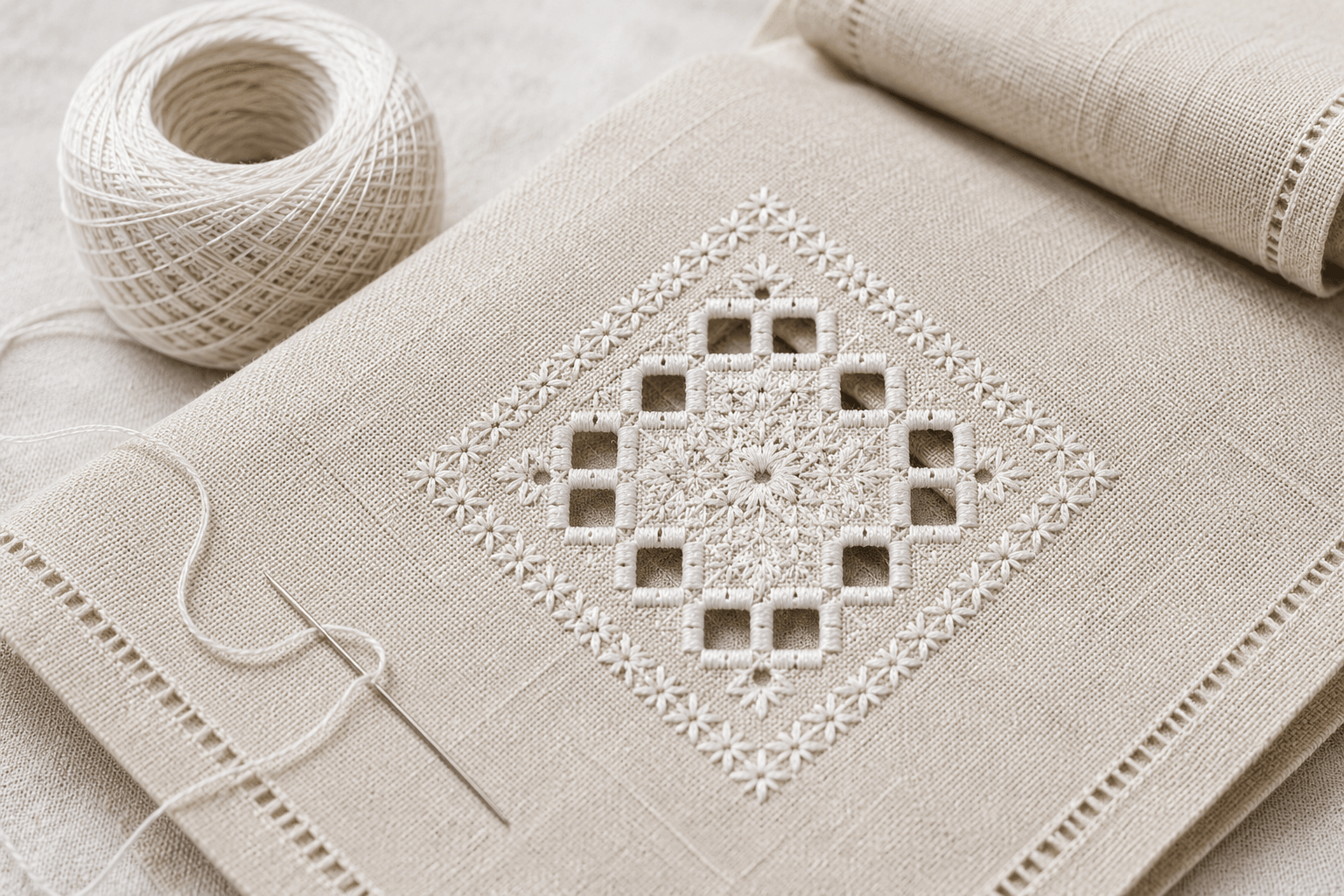

Hardanger embroidery is one of the most distinctive forms of needlework in the world, known for its geometric cutwork patterns, satin-stitch blocks, and delicate lace-like openings. But before a single stitch goes in, choosing the right fabric is what makes or breaks a Hardanger project. Unlike freestyle embroidery, Hardanger depends entirely on a very specific type of fabric structure — and getting this wrong is the most common reason beginners struggle with uneven blocks or fraying cutwork.
This guide breaks down exactly what fabric Hardanger embroidery uses, why it matters, and how to pick the right count and material for your project.
What Makes Hardanger Fabric Different From Regular Embroidery Fabric?
Hardanger originated in Norway and traditionally combines two techniques: satin-stitch blocks (called kloster blocks) and cutwork, where threads are literally cut and removed from the fabric to create open, lace-like sections. Because threads are cut and counted, the fabric has to meet a specific structural requirement that most embroidery fabrics don’t need to satisfy.
That requirement is even-weave construction — meaning the fabric has the exact same number of threads running vertically and horizontally per inch. This is very different from regular embroidery, which can be worked on nearly any fabric since the stitches sit on top rather than depending on a countable, symmetrical grid underneath.
The Fabric Traditionally Used: Hardanger Cloth
The classic and most widely used fabric for this technique is called Hardanger cloth (sometimes labeled Hardanger fabric or Hardangerklede). It’s a 100% cotton even-weave fabric woven with pairs of threads, almost always in 22-count — meaning 22 threads per inch in both directions.
Key characteristics of Hardanger cloth:
- Woven in pairs of threads, which is essential for cutwork stability — cutting single threads on non-paired fabric causes fraying and structural weakness.
- Standard 22-count, though 20 and 28-count versions exist for larger or finer designs.
- Comes in white, ecru, and a range of colors, with white and ecru being the most traditional choices for classic Hardanger pieces.
- Stiff enough to hold cut sections open without collapsing, but soft enough to stitch through comfortably.
Alternative Fabrics Used for Hardanger
While traditional Hardanger cloth is the standard, several other even-weave fabrics can be substituted depending on the project size, skill level, and desired look.
Aida Cloth (Limited Use)
Aida is more commonly associated with cross-stitch, and while it shares an even-weave structure, it’s rarely recommended for full Hardanger cutwork because its stiffer, more clustered weave doesn’t hold cut threads as cleanly as true Hardanger cloth. If you’re comparing the two techniques and their fabric needs, our breakdown of the difference between cross-stitch and embroidery explains why fabric requirements diverge between these closely related crafts.
Linen Even-Weave
Linen even-weave fabric is a popular higher-end alternative, especially for finer, more delicate Hardanger work. Linen counts are typically higher (28–36 count), producing smaller, more refined stitches, though it requires more precision and experience to cut cleanly.
Cotton Even-Weave (Non-Hardanger Branded)
Generic cotton even-weave fabrics, sometimes labeled simply as “evenweave,” can work as long as they maintain a true, symmetrical thread count and are woven densely enough to support cutwork. These are often a budget-friendly entry point for beginners practicing kloster blocks before committing to true Hardanger cloth.
Why Thread Count Matters So Much in Hardanger
The count of your fabric directly determines the finished size and density of your design, since Hardanger patterns are charted by thread count rather than free-form placement.
- 22-count is the traditional standard and the most beginner-friendly, offering clearly visible threads for counting.
- 20-count produces slightly larger, bolder designs — helpful for those with vision difficulty or larger tablecloth/runner projects.
- 28-count is used for finer, more intricate pieces, typically by more experienced stitchers.
Choosing the wrong count for your pattern will change the finished dimensions of the piece significantly, so always match your fabric count to what the pattern specifies.
Thread and Needle Pairing for Hardanger Fabric
The fabric isn’t the only material choice that matters — thread weight has to correspond to the fabric count to keep kloster blocks even and cutwork sections structurally sound.
- Perle cotton (pearl cotton) in sizes 5 and 8 is the traditional thread choice, with size 5 for the satin-stitch blocks and size 8 for finer filling stitches.
- Tapestry needles in appropriately blunt sizes (typically size 24 or 26) prevent splitting the even-weave threads while stitching.
- If you’re building a broader thread stash for multiple embroidery projects, our guide on how much embroidery thread you need can help you plan quantities for a full piece.
Tips for Choosing and Preparing Hardanger Fabric
- Buy slightly more fabric than the pattern calls for — cutwork removes structural threads, so a margin of extra fabric prevents fraying at the edges during finishing.
- Pre-wash and press even-weave cotton or linen to remove sizing that can make thread-counting harder.
- Use a hoop or frame to keep tension even while cutting, since loose fabric makes clean cuts much harder to achieve.
- Practice kloster blocks on scrap fabric first if you’re new to counted needlework — our overview of simple embroidery techniques is a helpful primer if you’re coming from freestyle embroidery rather than counted work.
Hardanger vs. Other Counted Needlework Fabrics
It’s easy to confuse Hardanger’s fabric requirements with other counted techniques like cross-stitch or needlepoint, but they aren’t interchangeable:
- Needlepoint uses canvas, not woven fabric, and doesn’t involve cutting threads — see our comparison of whether embroidery is the same as needlepoint for the full distinction.
- Cross-stitch typically uses Aida or lower-count even-weave, but doesn’t require the paired-thread structure Hardanger depends on for cutwork — our article on whether embroidery is the same as cross-stitch covers this in more depth.
- Punch needle work, another popular counted/textured technique, uses an entirely different fabric (monk’s cloth) — our embroidery punch needle kit guide explains that setup if you’re exploring related crafts.
Frequently Asked Questions
Can I use regular quilting cotton for Hardanger embroidery? No — quilting cotton isn’t woven as a true even-weave with paired threads, so cutwork sections will fray and lose structure. Stick to dedicated even-weave or Hardanger-labeled fabric.
What count of Hardanger fabric is best for beginners? 22-count is the standard recommendation for beginners, since it’s widely available, easier to count, and matches the majority of published Hardanger patterns.
Is linen or cotton better for Hardanger embroidery? Cotton Hardanger cloth is more forgiving and beginner-friendly, while linen offers a finer, more refined finish for stitchers comfortable with higher counts and more precise cutting.
Does the fabric color matter for Hardanger? Traditionally white or ecru is used for classic Hardanger designs, but colored even-weave fabric works fine as long as the weave structure and count match your pattern.
Final Thoughts
Hardanger embroidery is defined as much by its fabric as by its stitches. The paired-thread, even-weave structure of true Hardanger cloth — most commonly in 22-count cotton — is what allows kloster blocks to stay crisp and cutwork sections to stay stable. Whether you choose traditional Hardanger cloth, a linen even-weave, or a generic cotton even-weave for practice, matching thread weight and needle size to your fabric count is what ultimately determines how clean and durable your finished piece will be.
For more guides on embroidery techniques, fabric choices, and digitizing tips, browse the full Rise Digitizing blog.
Related Posts