🎉 New Customers: Get 7% OFF — Use Code FIRST7
⚡ Fast Turnaround Available — Start Your Order
Professional Logo Digitizing Service in USA
Are you looking for professional logo digitizing services in USA? We specialize in converting your logo and designs into high quality embroidery files that are compatible with all major embroidery machines. Whether you need digitizing for hats, shirts, jackets, uniforms, or campaigner items, our expert team ensures correct sewing accuracy and rapid change. With years of experience, we provide cheap logo digitizing in the United States without compromising on quality.
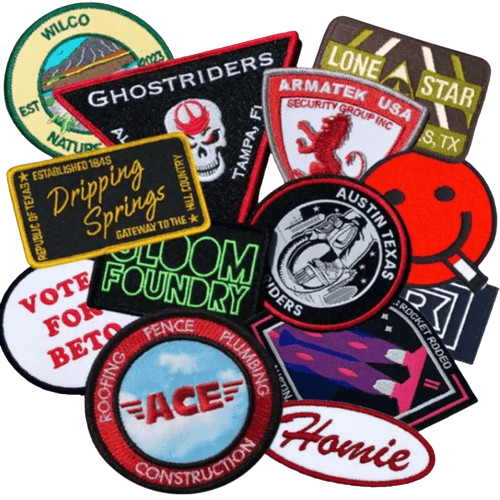
Professional Custom Logo Digitizing for Embroidery
Turn Your Artwork Into an Embroidery File That Is Built for the Real World
Our logo digitizing service transforms your existing artwork into a machine-ready embroidery design by planning the stitch structure behind the image. We consider the design’s size, lettering, shapes, stitch direction, density, underlay, sequencing, fabric, and intended application so the finished file is prepared for actual production.
- Fast Turnaround (Files delivered in 1-3 hours)
- Manual Logo Digitizing Files
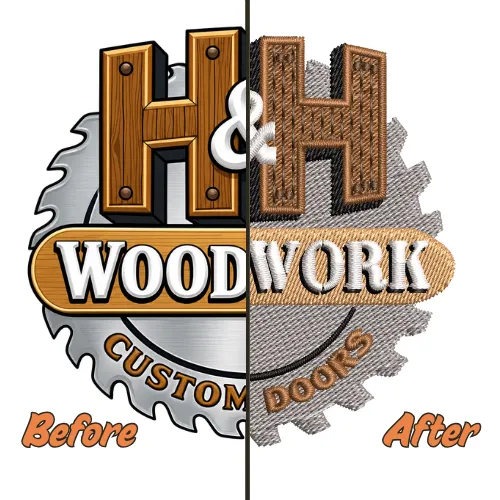
Common Problems Caused by Poor Logo Digitizing
Understanding the problems also explains why the file matters.
What Happens When We Receive Your Logo?
Every logo has different embroidery requirements. Our logo digitizing process considers your artwork, final size, and product to create a suitable embroidery file.
- We Examine Your Artwork
- We Consider the Final Size
- We Consider the Product
- We Create the Stitch Plan
- We Review the File
How it works
We received your order along with all relevant details.
You'll get confirmation email after we review your submission.
Our specialists will digitize your files with expertise.
After quality check we'll send you all required files via email.
We look forward to receiving your feedback and experience.
The Details Behind a Clean Embroidered Logo Digitizing
Good embroidery is often the result of decisions that are invisible once the final garment is complete.
Underlay Creates the Foundation
Underlay sits beneath the visible stitches and can help stabilize the embroidery area while providing a foundation for the top layer.
The right underlay depends on factors such as the stitch type, design structure, fabric, and application.
Using the same underlay approach for every design is not a substitute for understanding the project.
Density Controls Coverage
Stitch density affects how much thread is placed into an area.
Too little coverage can leave fabric showing through in places where solid coverage is expected. Excessive density can create unnecessary thread buildup and may contribute to stiffness, puckering, or other production issues.
The appropriate density is therefore a design decision rather than a number that can be applied universally.
Stitch Direction Adds Structure
Stitches are directional.
Changing their direction can help separate adjoining areas, follow the shape of an object, create visual texture, and influence the appearance of the finished embroidery.
A well-planned file does not treat every shape as a generic block of stitches.
Sequencing Affects the Sewing Process
Embroidery is built one section at a time.
The order of those sections can affect:
- Layering
- Overlaps
- Thread changes
- Trims
- Jump stitches
- Registration
- Production efficiency
A thoughtful sequence can make the design easier for the machine to execute while helping preserve the intended appearance.
Pull Compensation Accounts for Fabric Behavior
When thread is sewn into fabric, the material and stitching can react to one another.
Elements may appear narrower or shift from their intended dimensions depending on the design and material.
Pull compensation can be used as part of the digitizing process to account for expected movement.
It is another reason why embroidery digitizing is not simply tracing artwork.
One Logo Can Need More Than One Embroidery File
This is an important consideration for businesses using the same brand identity across multiple products.
Suppose your company logo is used on:
- A baseball cap
- A polo shirt
- A fleece jacket
- A large jacket back
- A work shirt
- A promotional bag
It may be tempting to create one file and resize it for every application.
That does not always produce the best result.
A large design may contain details that become impractical when reduced. A small cap design may need different treatment because of the curved surface. A left-chest version may need simplified lettering or detail.
For this reason, professional embroidery logo digitizing should consider the intended application rather than assuming that one file will work identically at every size.
Built Around the Way Your Logo Will Actually Be Used
For Corporate Branding
Companies often place logos on uniforms, polos, jackets, and employee apparel.
At these sizes, the design needs to remain recognizable while maintaining clean lettering and shapes.
For Caps and Hats
Cap embroidery presents a different physical environment.
The crown is curved, the available embroidery area is limited, and the design can interact with the cap structure.
The digitizing approach should therefore reflect the actual cap application.
For Workwear
Workwear can require logos that remain recognizable after repeated use and washing.
The file should be constructed with the garment and intended embroidery size in mind.
For Sports Teams
Team logos can include mascots, shields, numbers, names, and intricate graphic elements.
The artwork may require careful layering and detail management, particularly when the design contains small elements.
For Promotional Merchandise
Businesses may place logos on bags, hats, jackets, apparel, and other promotional products.
Different products can require different embroidery considerations even when the underlying brand artwork remains the same.
For Fashion and Apparel Brands
Fashion designers may use embroidery as a decorative element rather than simply as a corporate logo.
In these cases, stitch direction, texture, density, and detail can contribute to the visual character of the finished design.
What If Your Logo Is Too Detailed for Embroidery?
This is where experienced digitizing matters.
Not every element visible in artwork can be reproduced at every embroidery size.
Imagine a logo containing:
- A detailed illustration
- A thin outer border
- Tiny text
- Multiple internal lines
- Small negative spaces
- Several color transitions
If that artwork is reduced to a small chest logo, some of those features may physically have nowhere to go.
A professional approach does not simply force every detail into the file.
Instead, the design can be evaluated for what matters most to its identity.
That might mean:
- Increasing the thickness of an extremely thin line
- Adjusting small lettering
- Simplifying a tiny internal shape
- Removing a detail that cannot reproduce at the requested size
- Changing stitch direction
- Separating overlapping elements
- Adjusting the relationship between borders and fills
The purpose is not to redesign your brand.
The purpose is to make the brand work in embroidery.
Small Text Is One of the First Things We Check
Text that looks perfectly readable in digital artwork can behave very differently when converted into thread.
At a small size, letters have limited room for:
- Strokes
- Counters
- Corners
- Curves
- Spacing
If those elements become too small, letters can merge or lose their recognizable shape.
When you ask us to get logo digitized for embroidery, the final size of any text is therefore an important part of the assessment.
For some logos, a small tagline may need to be removed from the embroidered version while remaining present in the full-size artwork.
For others, a different construction may allow the lettering to remain legible.
The correct decision depends on the design rather than a universal rule.
From JPG, PNG or Vector Artwork to Embroidery
You do not necessarily need a particular artwork format to start.
We can review the source material you have and determine whether it provides enough information for the project.
1. Vector artwork
Vector files can provide clean paths, shapes, and text information and can be useful source material.
2. PNG files
Transparent PNG artwork can work as a visual reference when sufficient resolution and detail are available.
3. JPG files
A high-resolution JPG can also provide useful source information.
4. Screenshots
A screenshot may be enough to understand the design, although higher-quality artwork is preferable whenever available.
5. PDF artwork
PDF files may contain either vector or raster artwork, so their usefulness depends on what is actually contained in the document.
If your artwork first needs to be converted into scalable vector artwork, our convert to vector image service can be considered separately.
Vector conversion and embroidery digitizing are two different processes.
Why Vector Artwork Is Not the Same as an Embroidery File
This distinction causes confusion for many first-time customers.
A vector file describes shapes and paths.
An embroidery file describes stitches.
A vector logo can tell a designer that an area is a blue shape with a particular outline.
An embroidery file needs to tell the machine how to create that shape using thread.
That includes information about:
- Stitch type
- Stitch angle
- Stitch density
- Stitch length
- Sewing order
- Thread changes
- Trims
- Underlay
- Compensation
So converting a logo to vector format does not automatically make it embroidery-ready.
If you digitize my logo for embroidery, the goal is to transform the artwork into actual embroidery instructions.
Choosing the Right File Format for Your Machine
Different embroidery machines and software systems use different file formats.
Common formats include:
- DST: Widely used in commercial embroidery environments.
- PES: Commonly associated with Brother and compatible systems.
- JEF: Used with Janome embroidery machines.
- EXP: Used by certain commercial embroidery systems.
- VP3: Associated with certain Husqvarna Viking systems.
- HUS: Used with certain Husqvarna embroidery machines.
- XXX: Used by some embroidery systems and software.
The correct format depends on the equipment that will actually run the design.
If you already know your required format, include it when submitting your project.
Designed for Production, Not Just a Digital Preview
A common problem with low-quality digitizing is that the file may look acceptable in a software preview but reveal problems during actual sewing.
The physical stitch-out is affected by variables such as:
- Fabric stretch
- Fabric thickness
- Stabilization
- Hoop tension
- Thread
- Needle
- Machine settings
- Design density
- Design size
- Garment construction
That is why professional digitizing should be approached as embroidery production work rather than screen artwork.
We build the file around the information available about the final application.
When a project has specific requirements, providing those details before digitizing gives the digitizer more context for making appropriate decisions.
A Better Workflow for Embroidery Shops
If you operate an embroidery business, you already know that customer artwork rarely arrives in one consistent format.
One customer may send a clean vector logo.
Another may send a low-resolution social-media image.
Another may send a photograph of an old embroidered shirt and ask you to reproduce the design.
Your production team still needs a usable embroidery file.
Working with a dedicated logo digitizing company can provide an external workflow for converting customer artwork into embroidery-ready files.
This can be particularly useful when you receive:
- Corporate logos
- Sports graphics
- Restaurant branding
- School logos
- Construction company marks
- Automotive logos
- Event designs
- Promotional artwork
- Custom names and lettering
- Detailed illustrations
The digitizing requirements change from project to project, but the need for a production-focused file remains.
Supporting Your Brand Across Different Products
A strong embroidery workflow should make it possible to think beyond a single garment.
For example, a business may begin with a left-chest polo.
Later, it may want the same brand on:
- Hats
- Jackets
- Work shirts
- Bags
- Aprons
- Hoodies
- Promotional apparel
That creates a need for consistency without assuming that every application should use an identical file.
A professionally managed embroidery identity can include different versions designed around different physical applications.
The brand stays recognizable.
The embroidery construction adapts.
When You Should Consider Professional Digitizing
You may benefit from professional digitizing if:
1. You have a logo but no embroidery file
Your JPG, PNG, PDF, or vector artwork still needs to be converted into stitch instructions.
2. Your current embroidery file produces poor results
Problems such as excessive density, poor lettering, awkward stitch direction, or unsuitable sequencing may indicate that the file needs to be reviewed.
3. You need a new size
A large design may not simply scale down successfully.
4. You are moving to a different product
A file created for a flat garment may need reconsideration for a cap or another application.
5. You are opening an embroidery business
Having access to professional digitizing can help you handle customer artwork without requiring every design to be created internally.
6. You need recurring branded apparel
Businesses producing uniforms or merchandise can benefit from maintaining properly prepared embroidery assets.
What You Should Send With Your Artwork
The more useful project information you provide, the better the digitizer can understand the intended result.
If available, send:
1. Your logo
Use the highest-quality artwork you have.
2. Finished embroidery size
Tell us the approximate width and height you need.
3. Product
For example:
- Cap
- Polo
- Hoodie
- Jacket
- Uniform
- Bag
- Patch
4. Placement
Tell us whether the design is intended for:
- Left chest
- Right chest
- Front cap
- Back cap
- Jacket back
- Sleeve
- Other placement
5. Fabric
If known, provide the material or garment type.
6. Machine format
Tell us which embroidery format you require.
7. Special requirements
Mention anything important about colors, lettering, puff embroidery, patches, or other production requirements.
Our File Preparation Philosophy
We do not approach every artwork with a single preset and call the result finished.
The design itself determines the work.
A simple wordmark may need relatively straightforward construction.
A complex emblem may require considerably more planning.
A small cap logo may require different decisions from a large jacket-back design.
A detailed illustration may need more attention to sequencing and stitch direction.
This design-specific approach is central to professional logo digitizing services.
The objective is not to maximize the number of stitches.
The objective is to use the right stitches in the right places for the intended application.
What Quality Means in Embroidery Digitizing
Quality is not simply a high stitch count.
A design with more stitches is not automatically a better design.
Likewise, a file that opens successfully on an embroidery machine is not automatically well digitized.
A production-focused file should be evaluated through multiple factors.
Visual clarity: Does the embroidered design retain the important features of the original logo?
Coverage: Are filled areas constructed appropriately for the fabric and intended appearance?
Detail: Are important details preserved without introducing impractical micro-elements?
Lettering: Is the text appropriate for the finished size?
Stitch structure: Are the stitch types and directions appropriate for the shapes?
Sequencing: Is the sewing order logical?
Production practicality: Does the file avoid unnecessary complexity where possible?
Application: Was the design prepared with its intended product and size in mind?
These considerations are more useful than treating stitch count alone as a measurement of quality.
A Logo Digitizer Should Understand the Difference Between Artwork and Embroidery
Artwork is visual.
Embroidery is physical.
That difference is at the center of everything we do.
On a screen, a line can be one pixel wide.
On fabric, a thread has physical thickness.
On a screen, a gradient can transition through hundreds of shades.
With embroidery thread, those transitions have to be represented using available thread colors and stitch structures.
On a screen, an object can contain tiny negative spaces.
In embroidery, those spaces may disappear when the design is reduced.
Understanding these differences allows a digitizer to make informed decisions rather than simply tracing what appears on the monitor.
That is the practical expertise you are paying for.
Need to Digitize a Business Logo?
Business logos are particularly important because they are often reproduced repeatedly.
Your logo may appear on dozens or hundreds of garments over time.
A properly prepared master embroidery design can become part of your company’s production assets.
For recurring branding, you may want different versions for different applications.
For example:
- Small version: Designed for left chest or small apparel areas.
- Cap version: Prepared around the structure and available area of a hat.
- Large version: Created for jacket backs or larger promotional applications.
The visual identity remains consistent while the embroidery construction is adapted to the product.
Custom Work for More Than Standard Logos
Although our core focus is logo digitizing, the same technical principles can apply to many other forms of embroidery artwork.
These can include:
- Mascots
- Crests
- Badges
- Monograms
- Names
- Numbers
- Illustrations
- Promotional graphics
- Team artwork
- Personalized designs
If the artwork is intended to become embroidery, it needs to be evaluated according to the physical requirements of the medium.
Our custom embroidery digitizing service is suitable for projects that need more than a basic logo conversion.
Your Artwork Does Not Have to Be Perfect Before You Send It
Many customers hesitate to submit their logo because they only have an older or lower-quality version.
Send the best source you have.
Our team can review the artwork and determine what can be done with it.
If the artwork itself needs additional preparation, that can be identified before the embroidery file is created.
This is particularly helpful when the original logo only exists as:
- A website image
- A social-media graphic
- A scanned document
- An old business card
- A photograph
- A screenshot
- A low-resolution file
The important thing is to communicate what the final embroidered product needs to look like.
Frequently Asked Questions About Logo Digitizing
Logo digitizing means converting artwork into an embroidery file containing instructions that an embroidery machine can follow. The process determines stitch types, sequence, density, direction, underlay, and other technical elements needed to reproduce the artwork with thread.
Submit your logo and provide the intended size, product, placement, fabric, and required machine format if known. The artwork can then be reviewed and prepared as an embroidery file.
Yes. Online submission allows you to provide your artwork and project requirements without visiting a physical office. The final file can then be delivered digitally in the requested format.
A PNG can often be used as source artwork, especially when it has sufficient resolution and clear details. The suitability of the file depends on the design and the quality of the source image.
Yes. A high-resolution JPG can be used as reference artwork for digitizing. The better the source image, the more information is available to work from.
A screenshot can sometimes be used when no better artwork exists. However, original or high-resolution artwork is preferable because it provides more accurate information about the logo.
Pricing depends on the complexity of the artwork, size, embroidery technique, level of detail, and project requirements. A simple text-based logo generally involves less work than a highly detailed illustration
An embroidery logo digitizer is a professional who converts artwork into embroidery instructions. The work involves planning stitch types, direction, density, sequencing, underlay, and other production details.
Yes. Hat embroidery can require specific design considerations because the embroidery area is curved and limited. The file should be prepared according to the intended cap application.
Yes. Businesses can submit company logos for use on uniforms, caps, jackets, promotional apparel, bags, and other embroidered products.
Ready to Turn Your Logo Into Embroidery?
Professional logo digitizing converts your artwork into a machine readable embroidery file, guiding stitch placement, thread direction, lettering, and design details for accurate embroidery.
Our logo digitizing services consider your design size, fabric, product, and placement. Send us your artwork and requirements, and Rise Digitizing will prepare your logo for embroidery production.