

If you’re a novice to embroidery or are interested in embroidery with decorative stitches, you could be asking: is embroidery the same as cross stitch? This is one of the questions that newbies ask, particularly when deciding on which skill to study. Both cross-stitch and embroidery require needles, fabric, and thread, however, they differ with regard to technique, style, as well as the tools used and their purpose.
In this comprehensive guide, we’ll go over all you need to know about the ways that embroidery and cross stitch differ, the ways they’re related, which is more user-friendly to master, and which might be the best choice for your needs.
Let’s dive in.
What Is Embroidery?
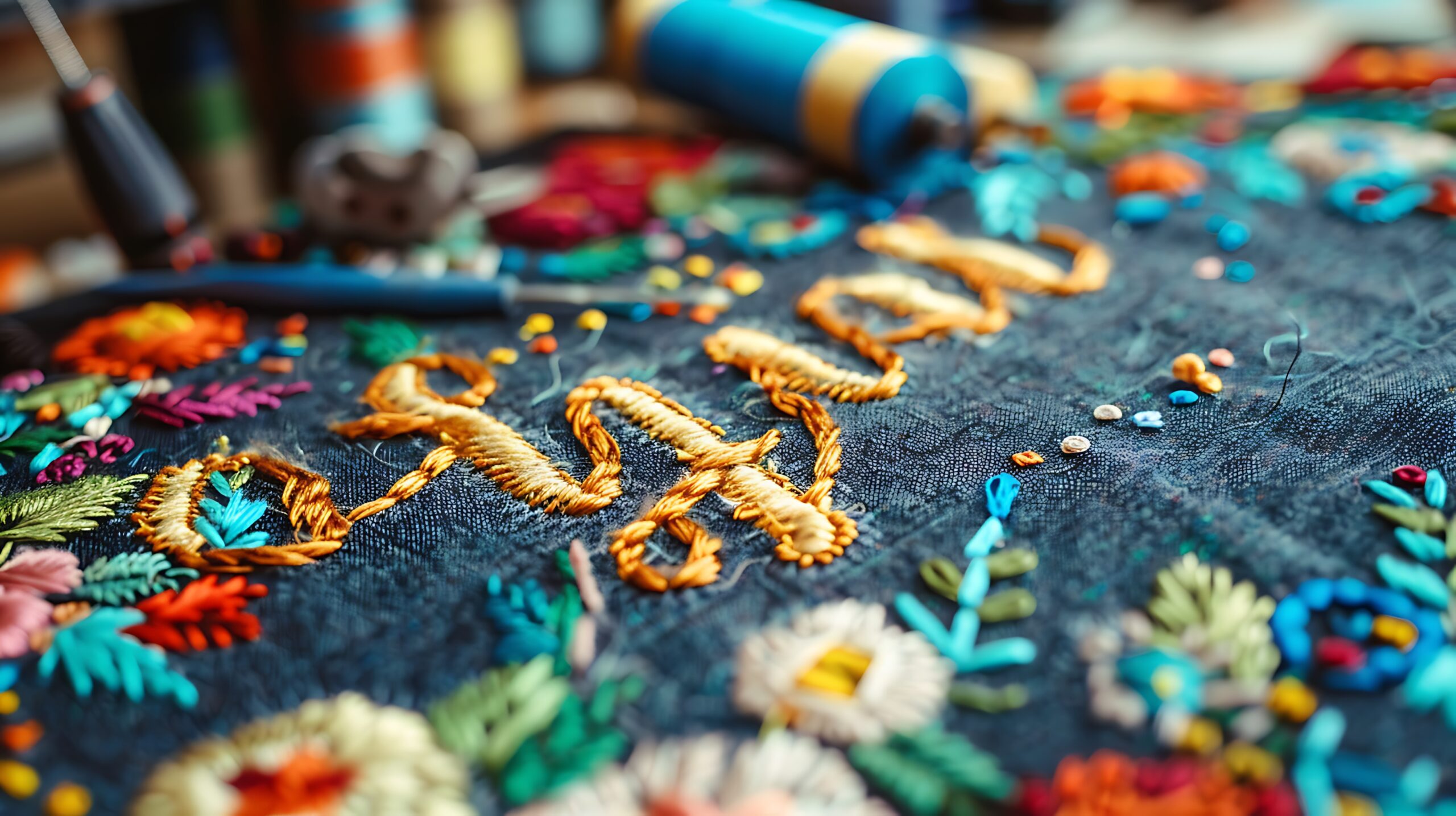
Embroidery is a vast imaginative art form made with thread and needles to embellish the fabric. It encompasses a variety of types of stitches as well as textures, styles, and patterns. Consider embroidery to be an umbrella for decorative stitching.
Common Embroidery Styles:
- Hand-embroidered
- Machine embroidery
- Crewel embroidery
- Satin embroidery
- Chain stitch embroidery
- Digital embroidery made with machines
Embellishment allows freedom of movement and the stitches are able to move anywhere. The possibilities are endless for creating flowers, designs and logos, portraits, textures, or even 3D effects.
Key Features of Embroidery:
- Flexible stitch direction
- Dozens of types of stitches
- It can be used on a variety of fabrics
- It is used for branding clothing as well as home décor and patches, logos, and art
- Handwork is possible or with a machine
If people are asking whether embroidery is similar to cross stitch, the answer is more clear when you comprehend the specific nature of embroidery. It gives you more choice and imaginative options.
What Is Cross Stitch?
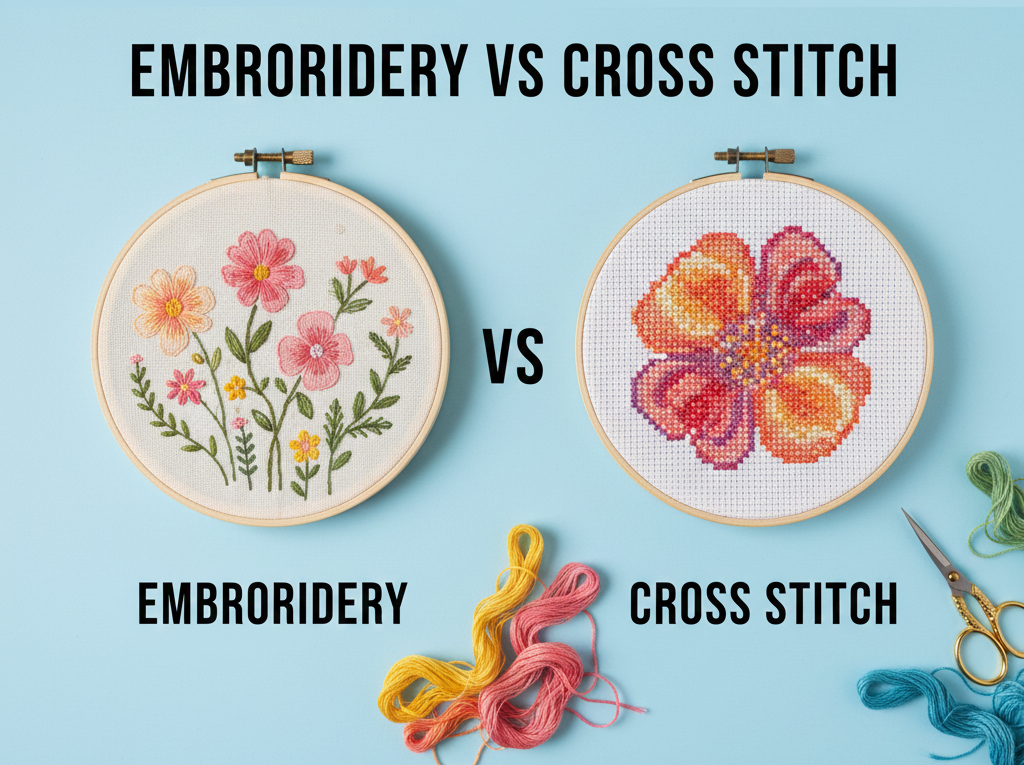
Cross stitch is a particular type of counted-thread stitch that is done on fabrics such as Aida cloth. It employs X-shaped stitches to create designs. They are then counted over the grid. This makes cross stitch more logical and mathematical.
Designs for cross stitch are often pixelated since each stitch looks similar to a tiny square tile. It’s extremely popular because of:
- Home decor art pieces
- Wall hangings
- Quotes
- Shaded patterns
- Beginner-friendly needlework
Key Features of Cross Stitch:
- Only uses X-shaped stitches
- Works on gridded fabric
- Stitch placement is counted
- Patterns look pixel-like
- Mostly done by hand
Cross stitch has a smaller range of options in comparison to embroidery, however, it’s much more accessible for newbies as it adheres to a clear counted pattern.
Is Embroidery the Same as Cross Stitch?
Embroidery is not like cross stitch. Cross stitch is just one type within the embroidery family. Embroidery is broad and creative, while cross stitch is organized and grid-based.
The easiest approach to grasp the concept:
Embroidery = Large category
Cross Stitch = One type within this category
So when you ask is embroidery the same as cross stitch, the answer is no — cross stitch is an example of embroidery, but embroidery encompasses many other stitching styles.
Main Differences Between Embroidery and Cross Stitch
Let’s look at the key differences in detail:
1. Stitch Types
Embroidery:
- Dozens of stitch styles: satin, chain, stem, backstitch, French knots, running stitch, feather stitch, and many more.
Cross Stitch:
- Only one main stitch: the “X”
- Variations include quarter stitches, half stitches, and backstitches, but the fundamental stitch is always an X
This alone makes it clear that embroidery and cross stitch are not the same.
2. Fabric Type Used
Embroidery:
- Can be done on almost any fabric: linen, cotton, denim, canvas, or fleece
Cross Stitch:
- Requires gridded fabrics such as:
- Aida cloth
- Evenweave
- Linen with visible holes
The grid ensures even stitches that can be counted accurately.
3. Technique and Difficulty
Embroidery:
- Freeform and artistic
- Requires control over stitch length, spacing, and direction
Cross Stitch:
- Simple and repetitive
- Follow printed patterns, count squares, and make Xs
Beginners usually find cross stitch easier.
4. Final Look and Texture
Embroidery:
- Smooth, flowing, textured, artistic
- Designs look hand-drawn
Cross Stitch:
- Pixelated, grid-like, geometric
- Designs resemble digital pixel art
5. Tools Required
Embroidery:
- Needles
- Embroidery hoop
- Threads (usually stranded cotton)
- Print pattern or transfer pen
- Wide variety of fabrics
Cross Stitch:
- Needles
- Aida cloth
- Pattern chart
- Embroidery floss
- Hoop (optional)
Cross stitch requires fewer tools and is simpler.
6. Purpose and Use
Embroidery:
- Clothing decoration
- Logos
- Home décor
- Personalized gifts
- T-shirts, caps, towels, bags
- Commercial branding (machine embroidery)
Cross Stitch:
- Wall art
- Quotes
- Gift pieces
- Table linens
- Home decoration
Similarities Between Embroidery and Cross Stitch
While the answer to is embroidery the same as cross stitch is no, they do share similarities:
- Both use needle and thread
- Both are types of decorative stitching
- Both are relaxing and creative
- Both require precision
- Both use embroidery floss
They belong to the same family but use different techniques and styles.
Which Is Better for Beginners?
Cross Stitch is better for absolute beginners:
- Simple, structured, repetitive
- Uses one stitch type
Embroidery is better for creative learners:
- Offers more stitch types
- Artistic freedom
- Can be done by hand or machine
Which One Should You Choose?
Depends on your goals:
Choose Cross Stitch if you want:
- Simple stitching
- Relaxing, repetitive projects
- Pixel-style patterns
- Pre-designed charts
Choose Embroidery if you want:
- Greater creative freedom
- Variety of stitch types
- Fashion accessories, logos, or artwork
- Hand or machine embroidery
If you transition to machine embroidery, you’ll use digitizing — something cross stitch does not require.
FAQs
1. Does embroidery resemble cross stitch?
No, embroidery is broad and encompasses many kinds of stitches, while cross stitch is one specific style using X-shaped stitches on gridded fabric.
2. Is cross stitch easier than embroidery?
Yes, because it uses a single stitch and follows a counted design, making it beginner-friendly.
3. Can I use embroidery floss for cross stitch?
Yes! Both crafts use the same threads (usually stranded cotton). You just adjust the number of strands according to your design.
Final Thoughts
So, is embroidery the same as cross stitch?
No, they are different but both are beautiful art forms.
Embroidery gives unlimited creative freedom with many stitch types, while cross stitch offers a simple, grid-based, pixel-like design approach. Both are relaxing, enjoyable, and perfect for handmade projects. Whether decorating clothes or creating wall art, each method provides unique advantages.
Rise Digitizing delivers high-quality embroidery digitizing services for companies, brands, and individuals worldwide.
If you require professional, clean, machine-ready embroidery, We are always available to assist you.