
If you are new to needlework, you may wonder: what is the difference between cross stitch and embroidery? While both involve stitching thread onto fabric, they are not the same.
Understanding the difference can help beginners choose the right craft and help businesses in the embroidery world understand how these techniques impact design, digitizing, and production.
At Risedigitizing, we work with embroidery every day, from custom digitizing to machine-ready embroidery files. In this guide, we’ll break down the major differences between cross stitch and embroidery in simple terms.
Quick Answer: Cross Stitch vs Embroidery
The biggest difference is this:
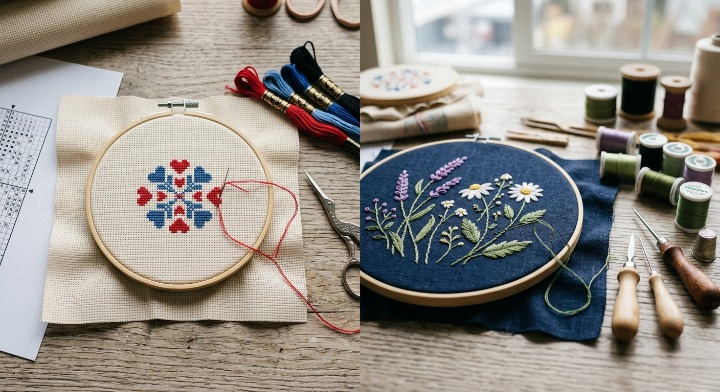
- Cross stitch is a type of counted-thread embroidery that uses X-shaped stitches to create patterns.
- Embroidery is a broader art form that includes many stitch styles, textures, and techniques.
In simple words: All cross stitch is embroidery, but not all embroidery is cross stitch. If you are curious about how this compares to other decoration methods, check out our guide on embroidery vs screen printing which is best.
What Is Cross Stitch?
Cross stitch is one of the oldest and most structured forms of embroidery.
It uses:
- X-shaped stitches
- Grid-based fabric like Aida cloth
- Counted patterns
- Uniform stitch sizes
Each stitch follows a strict chart, making the process more mathematical and precise. Cross stitch is often used for decorative wall art, personalized gifts, home décor, samplers, and floral patterns. Its highly organized style makes it exceptionally beginner-friendly. If you are exploring this side of the craft, you can read more about whether is embroidery the same as cross stitch to see how the two diverge historically.
What Is Embroidery?
Embroidery is a wider category of decorative stitching that includes many stitch types and styles.
Common embroidery stitches include:
- Satin stitch
- Running stitch
- Chain stitch
- Fill stitch
- Backstitch
- French knots
Embroidery can be:
- Hand embroidery
- Machine embroidery
- Custom logo embroidery
- Commercial embroidery
Unlike cross stitch, embroidery allows more freedom in design.
At Risedigitizing, we mainly focus on machine embroidery digitizing for logos, patches, and apparel.
Main Differences Between Cross Stitch and Embroidery
1. Stitch Style
Cross stitch only uses X-shaped stitches.
Embroidery uses many stitch types for texture and detail.
This makes embroidery more versatile.
2. Fabric Type
Cross stitch typically uses:
- Aida cloth
- Evenweave
- Linen
These fabrics have visible holes for counting.
Embroidery can be done on:
- Cotton
- Denim
- Leather
- Polyester
- Canvas
- Hats
- Jackets
This makes embroidery more flexible for fashion and branding.
3. Design Method
Cross stitch follows a counted grid pattern.
Embroidery can be freehand or digitized.
This is why businesses often choose embroidery for logos and uniforms.
4. Complexity
Cross stitch is easier for beginners because the stitch style stays the same.
Embroidery can be more advanced due to multiple stitch types and techniques.
5. Machine Compatibility
Cross stitch can be machine-made but is mostly handmade.
Modern embroidery heavily relies on embroidery machines.
Popular machine formats include:
- DST
- PES
- EXP
- JEF
These files are created using software like:
- Wilcom EmbroideryStudio
- Hatch Embroidery
- Embird
Which Is Better: Cross Stitch or Embroidery?
It depends on your goal.
Choose cross stitch if you want:
- Simple patterns
- Relaxing hobby work
- Decorative crafts
- Beginner-friendly projects
Choose embroidery if you want:
- Custom clothing designs
- Logo digitizing
- Business branding
- Professional apparel decoration
- Machine production
For commercial use, embroidery is the better choice.
Is Cross Stitch Used in Commercial Embroidery?
Rarely.
Businesses usually prefer machine embroidery because it is faster, scalable, and suitable for bulk orders.
Cross stitch is more common in handmade craft markets.
At Risedigitizing, most clients need embroidery digitizing for:
- Business logos
- Uniforms
- Caps
- Jackets
- Patches
- Sportswear
Why Does This Difference Matter in Digitizing?
Cross stitch patterns and embroidery files are built differently.
Cross stitch focuses on:
- Grid placement
- Color blocks
- Uniform stitch counts
Embroidery digitizing focuses on:
- Stitch angles
- Density
- Underlay
- Pull compensation
- Thread trimming
Professional digitizing ensures cleaner machine output.
That’s where Risedigitizing helps brands create accurate embroidery-ready files.
FAQs About Cross Stitch and Embroidery
Is cross stitch easier than embroidery?
Yes. Cross stitch is usually easier because it uses one main stitch pattern.
Can you use embroidery fabric for cross stitch?
Sometimes, but cross stitch works best on grid-based fabrics like Aida.
Is cross stitch considered embroidery?
Yes. Cross stitch is a type of embroidery.
Which is more profitable?
Machine embroidery is more profitable for business because it supports bulk production and custom branding.
Can embroidery machines do cross stitch?
Some advanced machines can simulate cross stitch patterns.
Final Thoughts
When comparing cross stitch vs embroidery, the key difference is structure versus flexibility.
Cross stitch is ideal for hobbyists who enjoy precise, patterned designs. Embroidery offers broader creative and commercial possibilities, especially in machine-based production.
If your goal is custom logo embroidery, patch digitizing, or apparel branding, professional digitizing is essential.
At Risedigitizing, we provide high-quality embroidery digitizing services to help businesses turn artwork into clean, production-ready embroidery files.
Related Posts