
In the world of modern design—whether digital or print—one term you’ll hear constantly is vector artwork. From logos to illustrations, product labels to embroidery designs, vectors form the backbone of clean, sharp, and professional visuals. If you’ve ever wondered why designers, printers, and branding experts rely heavily on this format, this guide breaks down everything you need to know.
What Is Vector Artwork?
Vector artwork is a type of digital graphic created using mathematical paths rather than pixels. Instead of being made of tiny dots like raster images (JPEG, PNG, GIF), vectors are composed of lines, shapes, curves, and points that can be scaled indefinitely without losing clarity.
Think of it like this:
- A raster image works like a photograph—zoom in too far, and it becomes blurry (pixelated).
- A vector graphic is like a blueprint—no matter how big or small you make it, the quality stays crisp.
This is why vectors are the preferred choice for professional design work, branding assets, and high-resolution printing.
Key Characteristics of Vector Artwork
To understand why vectors are so important, here are their main features:
✔ Infinite scalability – no pixelation
✔ Smaller file sizes compared to high-res raster images
✔ Easily editable in software like Adobe Illustrator or CorelDRAW
✔ Perfect for clean lines, shapes, and flat illustrations
✔ Ideal for printing, engraving, embroidery, and vinyl cutting
Benefits of Vector Artwork
1. Crystal-Clear Quality at Any Size
One of the biggest advantages of vector artwork is that it never loses quality when resized. Whether you are designing a small business card or a huge billboard banner, vectors remain sharp and smooth.
This makes them ideal for:
- Branding
- Product packaging
- Signage
- Apparel printing
2. Perfect for Logo Design
A logo must appear on everything—from tiny social media icons to giant outdoor displays. Vector format allows the same file to be used everywhere without recreating or resizing multiple versions.
3. Easy to Edit and Modify
Designers love vectors because they are flexible. If you want to:
- Change colors
- Adjust shapes
- Tweak typography
- Modify layout
…it can all be done quickly without damaging the image quality.
This is especially helpful for branding design, where consistent visuals are crucial.
4. Essential for Print Production
Printers prefer vector files for processes like:
- Screen printing
- Digital printing
- Heat transfer
- UV printing
Vectors ensure smooth edges and professional results across all mediums.
5. Ideal for Embroidery & Digitizing
For embroidery machines, vectors are extremely important because they provide clean outlines and perfect stitch paths.
Without good vector artwork, stitches may appear uneven or distorted. This is why digitizers always request a vector file for the best results.
6. Smaller File Sizes
Vectors are lightweight, even when scaled to huge dimensions. Designers benefit from faster workflow, easier file sharing, and smoother editing.
7. Supports Transparency and Clean Lines
Unlike raster images, vectors don’t show fuzzy edges or unwanted pixels. This makes them essential for:
- Decals
- Engraving
- Laser cutting
- Vinyl graphics
Common Uses of Vector Artwork
1. Logo and Brand Identity Design
brand asset creation, professional vector logos, corporate identity graphics.
2. Promotional Materials
Vectors are used for business cards, posters, brochures, banners, and flyers.
3. Apparel and Merchandise
Screen printing, DTG, DTF, and embroidery rely on vectors to maintain accuracy.
4. Web & UI Illustrations
Modern websites use vector icons and illustrations for a clean, responsive look.
5. CNC, Vinyl Cutting & Laser Engraving
Machines require precise shapes—vectors provide the perfect blueprint.
6. Marketing & Advertising
From social media graphics to packaging labels, vectors support high-quality brand visuals.
Vector Artwork vs Raster Artwork
| Feature | Vector | Raster |
|---|---|---|
| Image Type | Paths & equations | Pixels |
| Scalability | Infinite | Limited |
| Best For | Logos, illustrations, printing | Photos, textures |
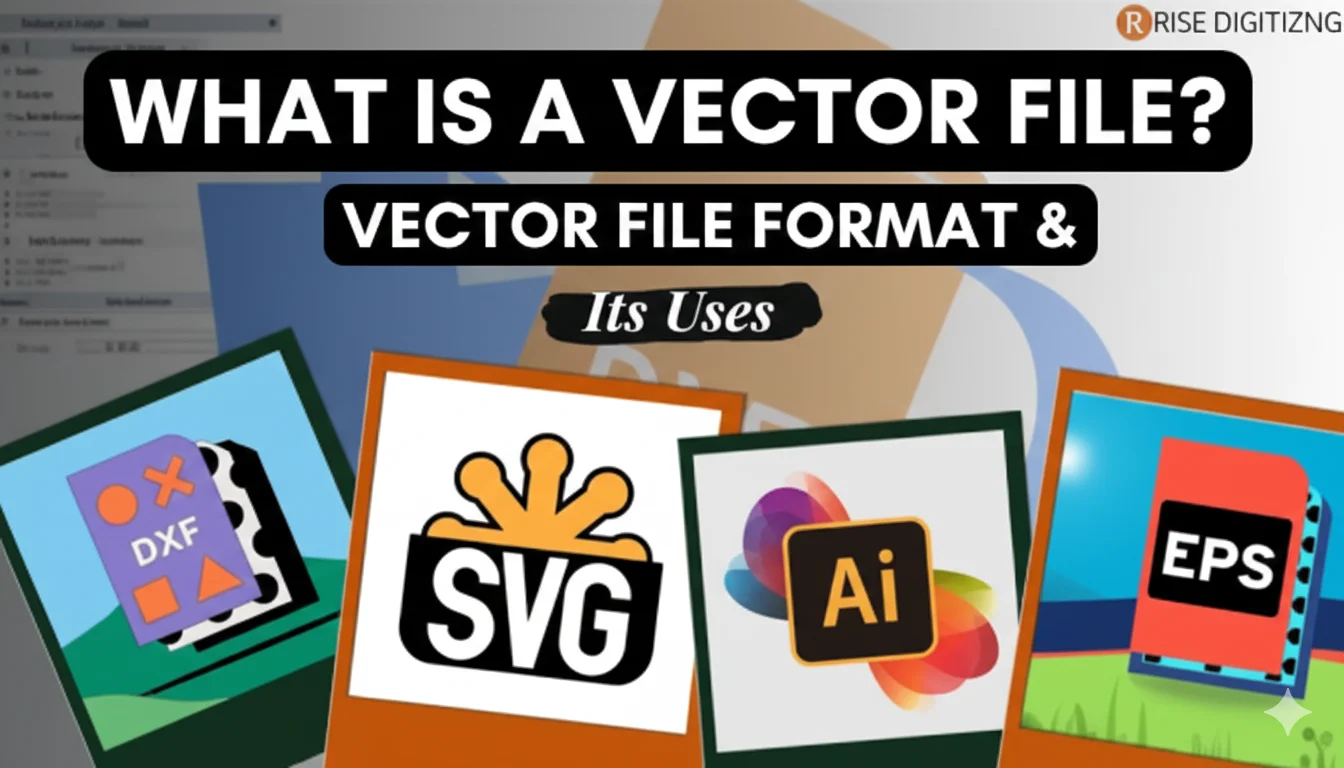
| File Types | AI, SVG, EPS, PDF, CDR | JPG, PNG, TIFF, GIF |
| Editing | Highly flexible | Limited |
Designers often convert raster images to vector format (known as vectorization) to improve quality and usability.
Why Designers Love Vector Artwork
1. Professional Quality Finish
Designers know vectors deliver flawless results—clean shapes, sharp lines, and perfect edges.
2. Works Across All Industries
Whether you’re a graphic designer, embroidery expert, screen printer, or marketer, vectors are universally compatible.
3. Long-Term Brand Consistency
Vectors help brands maintain identical visuals across all platforms.
4. Excellent for Creative Freedom
Illustrators can create detailed shapes, icons, typography, and patterns effortlessly.
Conclusion
Vector artwork is the backbone of professional design. Its scalability, precision, ease of editing, and versatility make it a favorite among designers, printers, and branding specialists. Whether you’re creating a logo, printing merchandise, designing packaging, or preparing embroidery files, vectors ensure your artwork remains sharp, clean, and high-quality.
Rise Digitizing delivers premium vector artwork services and flawless embroidery digitizing tailored for brands, designers, and print shops.
If you need clean, precise, and production-ready graphics, We ensures top-tier quality every time.